Written By: Marjorie Santos
The Philippine EV Market: A Growing Industry
Recent geopolitical tensions involving the United Arab Emirates, Iran, and the United States have reignited concerns over global oil supply stability. With the Philippines being a net importer of crude oil, these developments have contributed to rising fuel prices domestically, increasing the cost of transportation for both individuals and businesses. This surge in oil prices underscores the economic and environmental benefits of transitioning to electric vehicles (EVs), which can help reduce reliance on imported fuel while supporting cleaner, more sustainable transportation.
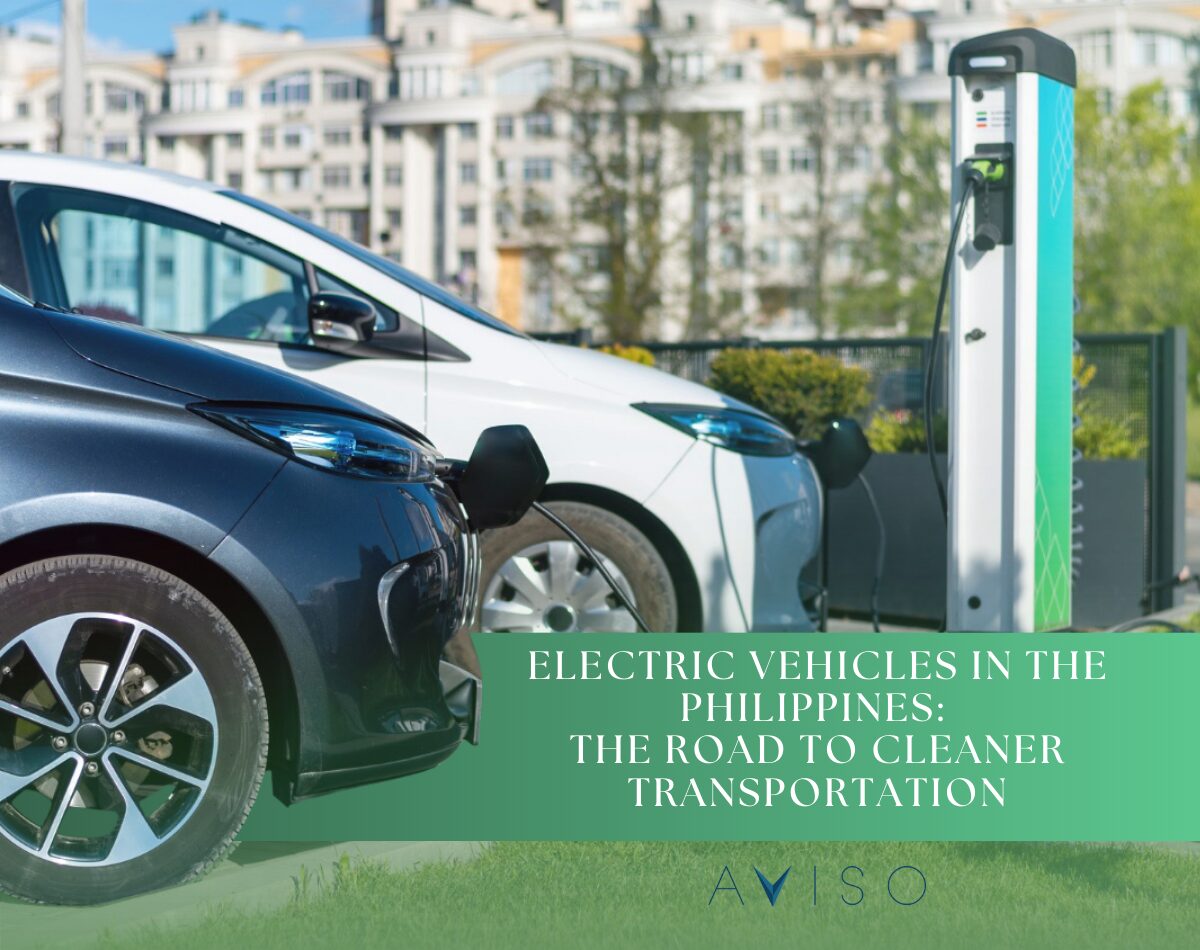
The electric vehicle (EV) industry in the Philippines has been gaining steady momentum. From less than 2% of total vehicle sales in 2023, EV sales climbed to nearly 4% in 2024. Projections show that by the end of 2025, EVs could make up as much as 5% of all vehicle purchases, or around 20,000 units out of 500,000 vehicles sold nationwide. This steady increase highlights the expanding role of EVs in the country’s automotive sector.
EVs are generally divided into three types. Battery Electric Vehicles (BEVs) run entirely on electricity. Plug-in Hybrid Electric Vehicles (PHEVs) use both a conventional engine and a rechargeable battery. Meanwhile, Hybrid Electric Vehicles (HEVs) also combine an engine with an electric motor but rely on regenerative braking and the engine itself to recharge, rather than external charging.
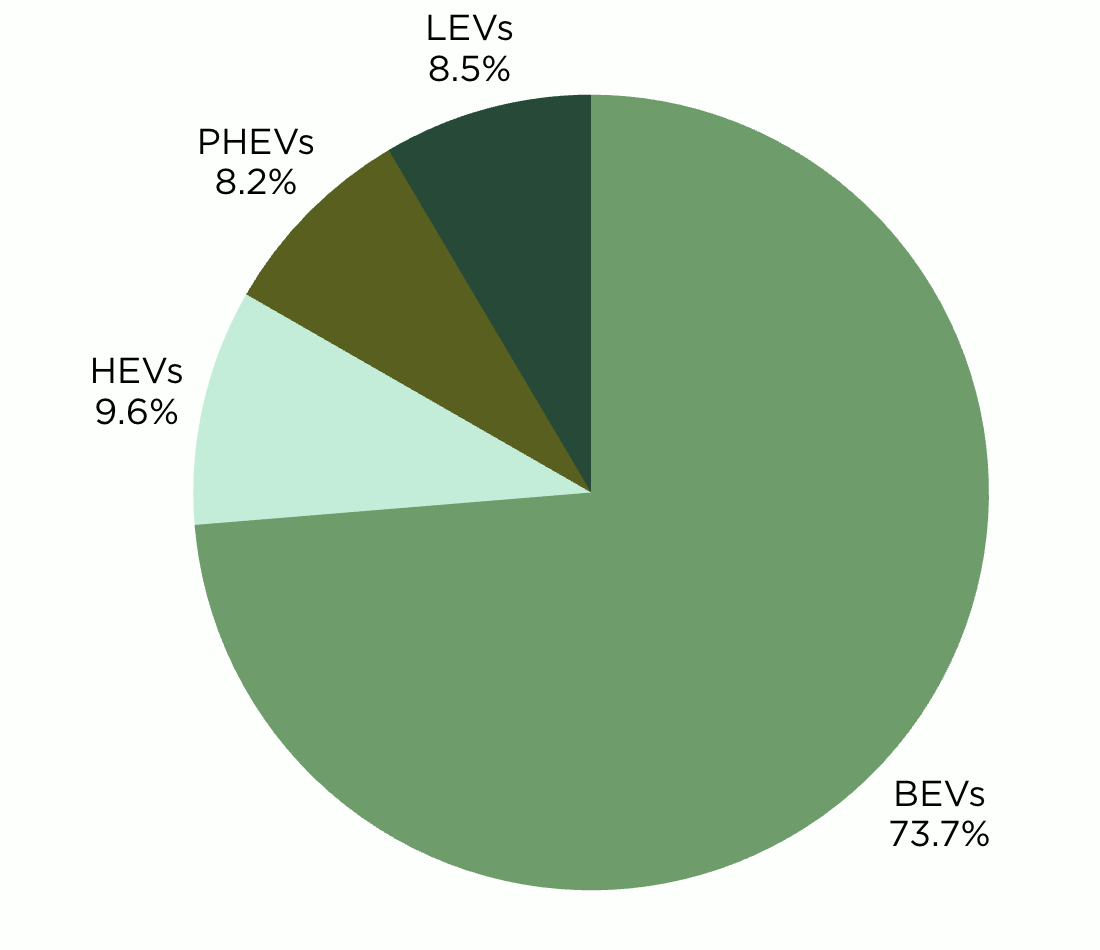
The Philippine EV market is also becoming more diverse. Based on Department of Energy (DOE) data, there are now 1,039 recognized EV models in the country, including Light Electric Vehicles (LEVs) such as scooters and bicycles. Of these, 766 are BEVs, 100 are HEVs, 85 are PHEVs, and 88 are LEVs. These figures reflect not only the dominance of BEVs but also the growing presence of other EV types, showing that both the government and the private sector are working to offer more sustainable transportation options.
Recognized EV Models
Aside from passenger cars, the EV landscape also includes e-motorcycles, e-trikes, and e-buses, which are helping to meet the needs of commuters and public transport users. This expansion underscores the adaptability of EVs in different areas of Philippine transportation.
Policies and Incentives Supporting EV Growth
Government support has been crucial in advancing EV adoption in the country. As early as 2006, the Land Transportation Office (LTO) issued measures formally recognizing Light Electric Vehicles (LEVs) as a separate category and providing registration guidelines.
Stronger momentum came in April 2022 with Republic Act 11697, also known as the Electric Vehicle Industry Development Act (EVIDA). The law focuses on three key points:
- Promotion of Electric Vehicle Utilization – Mandating the gradual use of EVs in government and private fleets, with incentives to support buyers and manufacturers.
- Establishment of Charging Infrastructure – Requiring the development of nationwide charging facilities, including dedicated spaces in fuel stations.
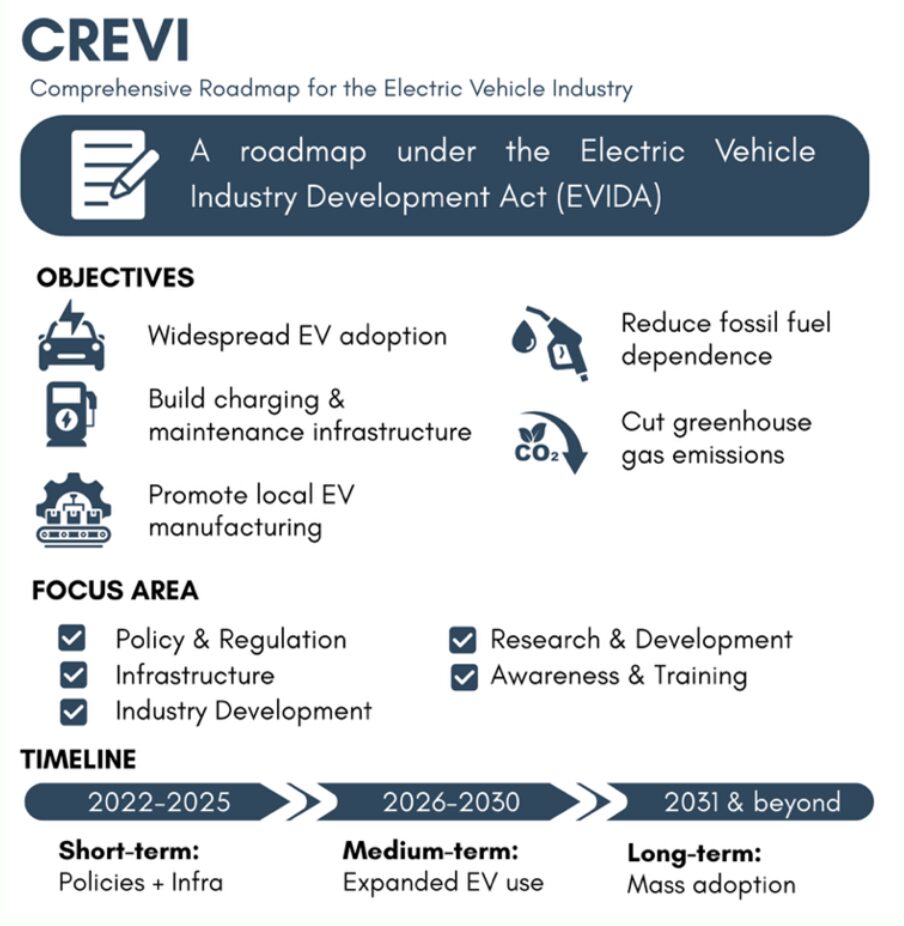
- Formulation of a Comprehensive Roadmap – Establishing the Comprehensive Roadmap for the Electric Vehicle Industry (CREVI), which outlines goals for EV manufacturing, infrastructure, research, and workforce development.
CREVI is part of the Electric Vehicle Industry Development Act (RA 11697). It outlines short-, medium-, and long-term plans to promote the adoption of electric vehicles nationwide. Among its major goals are achieving a 10% EV fleet share by 2028, expanding charging infrastructure, providing incentives to encourage EV purchases, and supporting local EV manufacturing and research. By 2040, the roadmap envisions 100% use of electric vehicles in public transport franchises.
Complementing this is the Electric Vehicle Incentive Strategy (EVIS), filed in June 2025 and awaiting approval. The EVIS aims to provide additional fiscal and non-fiscal incentives to promote local EV production, including batteries, motors, and components, as well as the establishment of charging stations and testing facilities. Once approved, the strategy is projected to attract billions of pesos in capital investments and generate around 680,000 jobs in areas such as EV assembly, battery production, charging station deployment, and maintenance services.
In addition, policy support has extended to trade measures. In May 2023, the National Economic and Development Authority—now reorganized as the Department of Economy, Planning and Development—reduced tariffs on all imported EVs to zero. This policy will remain in effect until 2028, though questions remain on whether the implementation of the EVIS will adjust this incentive to better stimulate local manufacturing in the long run.
Expanding Charging and Infrastructure
For EV adoption to grow, a strong infrastructure network is essential. Convenient charging access is one of the biggest factors influencing consumer confidence. Recognizing this, both government and private companies are accelerating the rollout of charging facilities.
According to DOE data, the number of public charging stations has risen from 300 in 2023 to more than 900 as of March 2025. The agency has also set a target of 7,300 stations by 2028.
Commercial establishments play a major role in this expansion. Nearly 12% of all public charging stations are found in malls, including SM Supermalls with 69 units, Ayala Malls with 31, Megaworld Lifestyle Malls with five, and Robinsons Malls with four. These locations make it convenient for EV owners to charge while shopping or attending errands.
Regional coverage is also improving. Cebu City now has 14 charging points, Davao has at least seven, and cities in Bicol such as Legazpi and Naga are showing promising growth.
The private sector has also invested heavily. In March 2025, logistics company Mober opened the country’s largest commercial EV charging hub in Pasay and announced plans for more hubs in Bulacan and Laguna. To date, 113 DOE-accredited providers are authorized to operate charging facilities, ensuring reliability and safety for EV users.
With government and private sector working hand in hand, the Philippines is gradually building the infrastructure needed to support a cleaner transport system.
Local Success Stories in EV Adoption
Several cities and communities have already taken the lead in promoting electric mobility. Their experiences serve as examples of how EVs can be integrated into local transportation systems.
In Quezon City, more than 300 e-trikes were distributed in 2023, and green zones were established where only e-trikes can operate. The following year, electric buses were deployed to provide free rides, helping the city reach its goal of reducing greenhouse gas emissions by 30% by 2030. By 2025, the city also introduced a shared hybrid fleet for its departments, further strengthening its mobility initiatives.
Valenzuela City is recognized for having the largest EV police fleet in the country, with 41 units. To support this, the city established 22 charging stations under its “Go Green Valenzuela” program, ensuring both public and government users have access to EV infrastructure.
Makati City, a pioneer in sustainable mobility, started operating hybrid buses as early as 2013. Recently, it partnered with ACMobility to build 74 charging stations across 18 locations, providing solid support for EV users in the city.
Meanwhile, Boracay Island has long embraced EVs as part of its tourism and environmental programs. As early as 2013, gasoline tricycles were converted into e-trikes through partnerships with microfinance groups and local manufacturers. Over the years, the island has expanded its fleet through government donations and private investments, with charging stations even powered by renewable energy such as recycled cooking oil. More recently, in 2024, the Department of Tourism donated eight e-trikes to local service providers, further promoting sustainable transport on the island.
These local efforts show that EV adoption is possible across different contexts—from big cities to tourist destinations—and that community-level initiatives can significantly contribute to the country’s transition to greener mobility.
The steady rise of electric vehicles in the Philippines reflects a clear shift toward sustainable mobility, driven by a combination of government support, infrastructure development, and private sector participation. From the establishment of hundreds of charging stations to the successful implementation of local initiatives, the country is gradually laying the foundation for a cleaner transport system.
While projections indicate continued growth, local manufacturing and nationwide infrastructure coverage still need to be addressed. For now, the Philippines is moving in the right direction, showing that with consistent policy support and stronger collaboration between public and private sectors, the EV industry can play a central role in shaping a more sustainable and resilient future for transportation.
___________________________________________
Aviso Valuation and Advisory Corp. is a real estate consultancy firm that offers valuation and business advisory services that are compliant with international standards such as the International Valuation Standards (IVS) and International Financial Reporting Standards (IFRS). To assure that we only produce high-quality deliverables, as needed, we do tasks beyond the usual appraisal process like verifying pertinent property documents (i.e. land titles, tax declarations, etc.) with the appropriate government agencies for due diligence purposes prior to the acquisition of the properties.