Written By Mary Grace C. Ladringan and Angelo M. Gandia
Flooding remains among the most pressing challenges in the Philippines. As one of the world’s most disaster-prone nations, the country experiences recurring losses from typhoons, torrential rains, and rising sea levels every year. While the immediate impact includes displacement and property damage in the community, the long-term effects extend more deeply, affecting real estate values, investor confidence, and urban development patterns.
In response, flood control projects have gained attention as disaster-prevention measures and strategic investments in infrastructure. These initiatives can shape property markets, enhance resilience, and guide sustainable growth, making them critical considerations for developers, investors, and policymakers.
The Flooding Challenge in the Philippines
For sixteen consecutive years, the Philippines has been recognized as the most disaster-prone country in the world, facing natural disasters such as typhoons, earthquakes, and droughts. Among these, flooding stands out as the most prevalent and destructive issue.
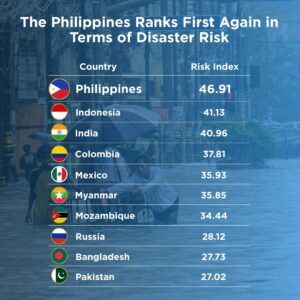
According to the 2024 World Risk Index, the country’s disaster risk score increased slightly from 46.86 in 2023 to 46.91 in 2024. This change has primarily resulted from factors such as rapid urbanization, inadequate drainage infrastructure, and the intensifying effects of climate change, particularly in densely populated urban areas.
The severity of the flooding issue became more evident from the recent typhoons. In July, monsoon rains resulted in significant flooding across Metro Manila and the wider Luzon area, with water levels reaching knee-to-waist depth. This situation led to substantial disruptions within communities, including the suspension of government operations, cancellation of flights, and suspension of classes. Residents faced the challenge of passing through deep waters to access essential services, while those living in close proximity to waterways were required to evacuate.
Beyond these immediate effects, flooding causes long-term damage to homes, infrastructure, and local economies. In affected areas, the repeated flooding slows economic development, discourages new investments, and weakens investor confidence. As a result, property values in high-risk areas decline, reducing growth opportunities for the real estate sector unless effective flood prevention measures are implemented.
The Massive Flood Control Projects in the Philippines
Between July 2022 and May 2025, the government spent over ₱545 billion (USD 9.5 billion) on 9,855 flood-control projects. Yet, severe flooding has raised questions about these projects, with concerns over poor construction and corruption. In his July State of the Nation Address (SONA), President Marcos Jr. called on those involved in flawed projects and those who have received kickbacks to act with integrity.

Source: Sumbong sa Pangulo, Philippine Statistics Authority, Philippine Center for Investigative Journalism
Flood-control funding shows major disparities. Metro Manila, the economic center, received ₱52.5 billion for 1,058 projects—more than any other region—despite being a smaller region in terms of size. By contrast, Pampanga and Nueva Ecija, the two most flood-prone provinces, received just ₱14.3 billion and ₱9.3 billion, respectively, despite having extensive flood-prone land. Mindanao provinces, such as North Cotabato and Maguindanao, which are also at high risk, received even less funding.
These statistics underscore that political and economic priorities significantly influence the allocation of flood-control funds. While urban centers like Metro Manila and Bulacan continue to receive substantial investment, many high-risk areas remain underfunded, leaving communities vulnerable to recurrent flooding events. This imbalance between vulnerability and funding allocation emphasizes the urgent necessity for more equitable and transparent planning to ensure that flood-control initiatives effectively target the regions most at risk.
Flood Protection as a Multifaceted Investment
Infrastructure for flood protection plays a vital role, not only as a defense against financial losses, but also as the groundwork for development that is both resilient and sustainable. These solutions provide long-term benefits for social, environmental, and climate-related concerns by mitigating the immediate impacts of flooding. The inclusion of multipurpose features, such as parks and green corridors, can provide recreational opportunities and create safe spaces that help alleviate the psychological and physical effects of disasters.
From an economic perspective, flood protection infrastructure raises property values, reduces business interruptions, and attracts investment, often facilitating redevelopment in areas previously prone to flooding.
Additionally, these measures can help the environment by mitigating erosion, improving water quality, and fostering biodiversity through the development of wetlands and other green infrastructure. By integrating green spaces that serve as carbon sinks with low-carbon urban developments, such as bike lanes and greenways, these initiatives also play a crucial role in advancing climate objectives.
International organizations have made significant financial commitments to enhance flood resilience, recognizing the numerous benefits associated with it. In 2023, the Asian Development Bank approved a $303 million loan for the Philippines’ Integrated Flood Resilience and Adaptation Project (IFRAP). This initiative aims to provide adequate flood protection while simultaneously restoring ecosystems and promoting sustainability. It employs a harmonious blend of traditional “grey” infrastructure, such as levees and pumping systems, with “green” strategies, including the restoration of mangroves and the reestablishment of natural river courses. This approach exemplifies a growing trend in urban planning that seeks to integrate “blue,” “green,” and “grey” infrastructure.
Beyond mitigating flood risk, the combination of natural systems and engineered solutions provides numerous benefits for urban environments. It aids in restoring ecosystems, enhancing drainage efficiency, and also improves the aesthetic quality of communities. Moreover, blue-green infrastructure supports mental well-being by cultivating vibrant and healthy communities.
International organizations have made substantial financial commitments to enhance flood resilience, acknowledging its extensive benefits. Evidence from various regions worldwide reinforces the significance of these investments. For instance, studies indicate that each dollar allocated for flood control can yield more than six dollars in economic returns. One notable example is the Natorigawa River flood protection project in Japan, which achieved a benefit-cost ratio of 6.1. Similar findings from diverse locations underscore that flood protection represents a high-return investment, contributing to the preservation of lives, stimulating economic activity, and promoting long-term urban resilience.

The Government of Japan
Thoughtfully designed flood protection systems serve as multifunctional investments. They not only shield communities from natural disasters but also enhance economic stability, rehabilitate ecosystems, and encourage sustainable urban development.
Impact on Property Values
Flood control projects have a significant influence on real estate markets. In addition to the primary function of protecting infrastructure and human life, these initiatives instill a sense of security that profoundly affects perceptions of properties in flood-prone areas. When communities are supported by reliable flood mitigation infrastructure, properties become more attractive to potential investors and buyers, increasing their marketability. As the perception of risk diminishes, demand tends to increase, contributing to more vibrant and active real estate markets.
Additionally, the implementation of flood control measures can stabilize or even elevate land values, particularly in regions that were previously highly vulnerable to flooding. By effectively addressing these risks, flood control initiatives unlock opportunities for residential and commercial real estate development, transforming previously undeveloped areas into sought-after investment destinations. This escalation in land values facilitates additional reinvestment in urban infrastructure, benefiting both individual property owners and the broader economic health of communities.
More significantly, properties situated in regions protected by efficient flood control measures gain improved access to financing. Financial institutions and insurers typically regard these properties as lower risk, thereby simplifying the process for buyers and developers to obtain financing and insurance on favorable terms. This dynamic reinforces a cycle of growth and confidence within these markets.
The advantages of flood control offer benefits that extend beyond disaster relief to developers and municipal governments. Such measures increase the appeal and competitiveness of urban areas, making it more desirable locations for individuals to reside, work, and invest.
The Bigger Picture: Sustainable Urban Planning
Flood control projects are essential components of sustainable urban planning. In rapidly urbanizing countries like the Philippines, managing flood risks has become challenging to ensure livable, inclusive, and climate-resilient cities. When coupled with data-driven valuation, feasibility studies, and integrated planning, flood control systems create opportunities for long-term resilience and balanced development.
By reducing vulnerability to natural disasters, these projects help foster resilient communities capable of withstanding climate-related shocks. It also provides the foundation for balanced development, ensuring that critical infrastructure supports urban expansion without compromising safety. Furthermore, by mitigating environmental and financial risks, flood management projects create opportunities for sustainable investments that align with global resilience and climate adaptation goals.
According to the Asian Development Bank, urban flood risk management must be integrated into a comprehensive climate adaptation strategy to safeguard both people and the economy. Similarly, the World Bank highlights that integrating flood risk reduction into urban planning enables governments to attract sustainable investments, protect livelihoods, and achieve long-term development goals. Together, these perspectives emphasize that flood control should not be treated as a standalone technical solution, but rather as a cornerstone of sustainable urban growth.
Flood control is no longer just an engineering or technical issue; it is an economic, real estate, and sustainability imperative. With proper planning, valuation, and feasibility studies, flood management projects can unlock safer, smarter, and more resilient cities in the Philippines.
Aviso Valuation & Advisory Corp. supports resilient infrastructure by aligning flood control with sustainable growth. Our expertise in valuation, feasibility, and community development ensures these projects drive both protection and urban progress.
__________________________________________________________________________
Beatriz Marie D. Cruz (September 10, 2024). Philippines is still most disaster-prone country for 16th straight year. BusinessWorld. https://www.bworldonline.com/top-stories/2024/09/10/620230/philippines-is-still-most-disaster-prone-country-for-16th-straight-year/
Mary Joy Salcedo (July 25, 2025). Heavy rains, floods loom over Metro Manila, 36 provinces Friday. Philippine Daily Inquirer. https://newsinfo.inquirer.net/2086881/heavy-rain-floods-loom-over-metro-manila-36-provinces
Luisa Maria Jacinta C. Jocson (September 13, 2023). ADB approves $303-M PHL flood risk management loan. BusinessWorld. https://www.bworldonline.com/economy/2023/09/13/545423/adb-approves-303-m-phl-flood-risk-management-loan/
Guinevere Latoza (August 31, 2025). Five Reveals from the Flood-Control Data. PCIJ https://pcij.org/2025/08/31/5-reveals-from-the-flood-control-data/
Mikio Ishiwatari, Masashi Sakamoto, and Daisuke Sasaki (September 2023).Estimating the economic viability of long-term investment in flood protection: Case study of the Natorigawa River. JICA https://www.jica.go.jp/english/jica_ri/publication/research/__icsFiles/afieldfile/2025/05/28/Research_Paper_No4_DOI.pdf
https://onlinelibrary.wiley.com/doi/epdf/10.1111/jfr3.12500