It has been a year since the pandemic struck the world, which has caused significant disruptions to the economy and changed society’s lifestyle. The rise of online setup for work, education, business, and health consultation has become the new normal. As people began to work remotely, they were required to bring their office devices into their homes and use appliances more frequently for their comfort. This has taken a heavy toll on the energy sector as the electricity demand surged, causing the supply of power reserves in Luzon to become insufficient.
It will be remembered that the National Grid Corporation of the Philippines (NGCP) placed the Luzon grid on yellow and red alerts in the first half of 2021. As a result of the so-called manual load dropping to maintain power grid stability, 17 power-generating companies went offline as it exceeded their plant outage allowances. Metro Manila and neighboring provinces experienced rotational brownouts that lasted less than an hour due to insufficient power supply. It is expected to worsen in 2022 due to aging power plants, a decrease in the power rating of gas plants, and a lack of gas fuel from the Malampaya field.
On the other hand, rotational blackouts are not a long-term solution; it is only a temporary aid that can harm the productivity of people working remotely and students taking online classes. Power supply volatility may also be affecting COVID-19 vaccination rates, as the vaccines require stable energy to meet temperature control requirements.
The Philippines’ current blackouts and the associated energy supply and security issues have already prompted multi-sectoral and call-to-action efforts to change the country’s energy system. Also, according to environmental experts, the world should reduce its carbon emissions by 2030 if it wants to keep the Earth’s average temperature rise below 2°C until 2050. On the other hand, an upgrade is required to turn things around, and investing more in renewable energy development is the answer.
What is renewable energy?
Renewable energy, also known as clean energy, comes from naturally replenished sources or processes. This can include carbon-neutral sources such as sunlight, wind, rain, tides, and waves, as well as geothermal heat.
Renewables are becoming a more critical source of electricity as we develop more innovative and cost-effective methods such as wind and solar power. Renewable energy is expanding on all scales, from rooftop solar panels to massive coastal wind farms. Some rural communities in other countries rely almost entirely on renewable energy for heating and lighting.
In fact, according to a report by the Office of Energy Efficiency and Renewable Energy, solar energy has the potential to supply up to 40% of the electricity in the United States within the next 15 years. A tenfold increase over current solar output, but one that would necessitate massive policy changes and billions of dollars in federal investment to modernize the nation’s electric grid.
According to US Energy Secretary Jennifer Granholm, the study “illuminates the fact that solar, our cheapest and fastest-growing source of clean energy, could produce enough electricity to power all of the homes in the US by 2035 while employing up to 1.5 million people.”
Renewable energy in the Philippines
As the potential impact of climate change becomes more apparent, climate action has emerged as a significant issue for energy supply, energy security, job creation, and essential post-pandemic factors such as cleaner air and a healthy planet.
Last year, the Philippines saw several victories in the ongoing fight against climate change and the push for sustainable energy resources. The government’s call to action on climate change has prompted several initiatives from various branches. Congress passed a resolution declaring a climate emergency as we continue to combat the crisis.
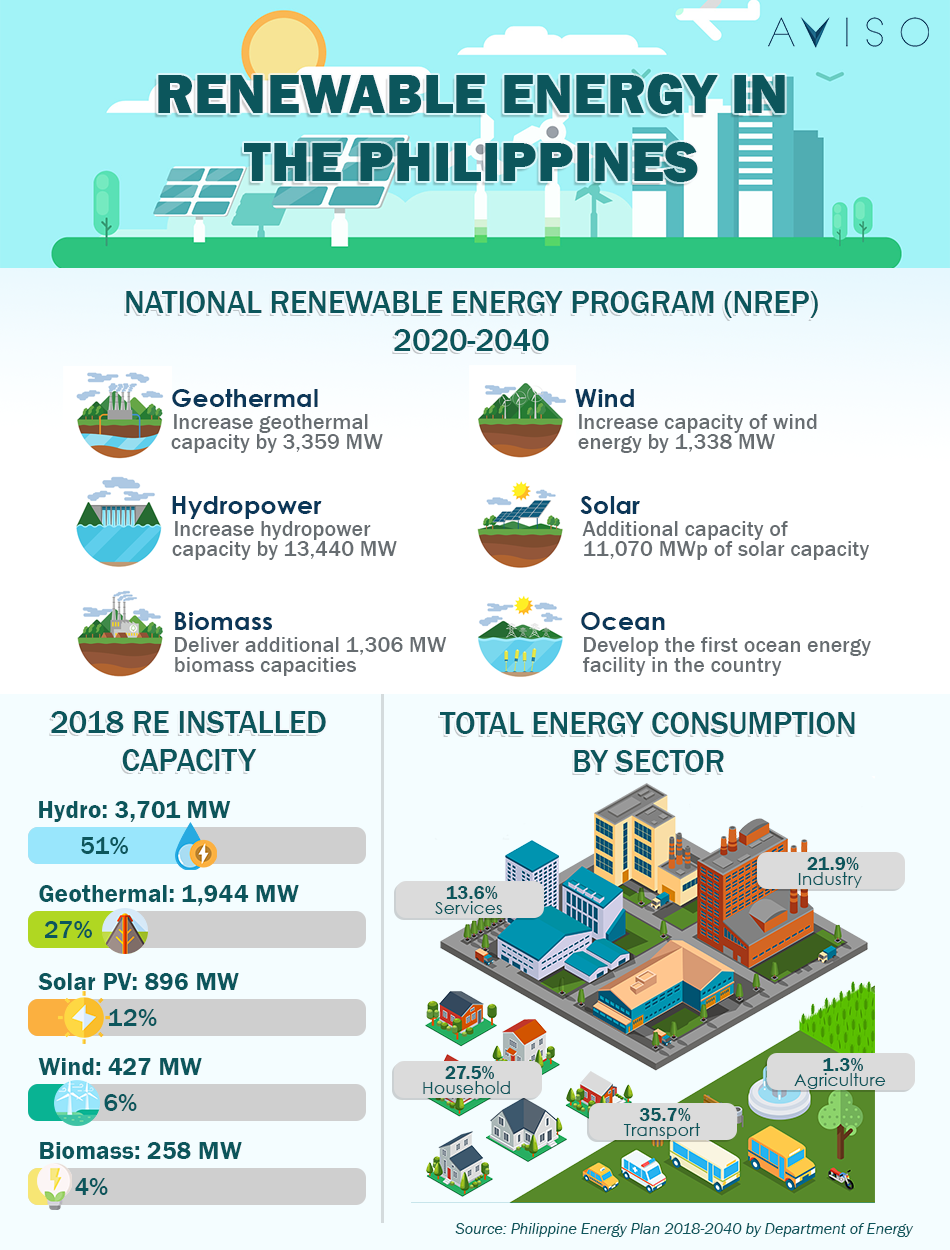
Meanwhile, the Department of Energy announced that the Philippines is ready to shift to alternative energy and is pushing for renewable, low-carbon, and zero-carbon energy sources to meet the country’s energy demands. Clean and renewable energy sources such as geothermal, hydro, wind, biomass, and solar energy are among the country’s few competitive advantages, especially given the lack of significant fossil fuel deposits.
Furthermore, renewable energy (RE) accounted for 33% of the country’s Total Primary Energy Supply in 2019, according to the DoE. Energy Secretary Alfonso Cusi stated in a virtual Energy Investment Forum last December 2020 that renewable energy share as of 2020 accounts for 29.2% of the country’s power capacity mix. Hydro contributing 14.6%, followed by geothermal at 7.5%, solar at 4%, wind at 1.7%, and biomass at 1.4%.
Leading energy companies that have taken the initiative to harness the country’s renewable resources contribute to this share. AboitizPower, together with its partners, is the Philippines’ largest owner and operator of renewable energy, with a total installed capacity of more than 1,500 megawatts (MW) to date.
Meanwhile, First Gen Corp. has a RE portfolio that includes a significant amount of geothermal energy and hydro, wind, and solar. According to its most recent annual report, geothermal accounts for 34% of First Gen’s installed capacity by source, with hydro, wind, and solar accounting for the remaining 8%.
MERALCO PowerGen Corp. (MGen), on the other hand, through its RE unit MGen Renewable Energy, Inc. (MGreen), has a portfolio led by solar, with its 50-MW solar plant in San Miguel, Bulacan, which began operations in May this year.
In terms of shopping malls, Robinsons Land Corporation (RLC) has recently expanded its solar energy portfolio to 23 Robinsons Malls across the country. With this, the total capacity in its current locations has increased to 29.5 MW, and the malls have generated 92 million kWh of clean energy to date. The move also successfully eliminated 65,260 metric tons of CO2. RLC has used solar energy since early 2015, making it a pioneer in generating its power source to meet the needs of its malls.
The future of Philippine energy
Renewable energy is evolving as innovation lowers costs and delivers on the promise of a clean energy future. The widespread use of renewable energy also generates job opportunities. In fact, since 2018, the renewable energy sector has employed 11 million people worldwide. According to a report by McKinsey in May 2020, government spending on renewable and energy efficiency creates three times the amount of work as spending on fossil fuels.
Higher consumption of fossil fuels increases air pollution, while renewable energy reduces health risks. It can also provide universal access to electricity while lowering consumer costs. Giving businesses more options for low-cost clean energy sources can result in savings and higher profit margins, especially for small and medium-sized enterprises to build a future based on renewable energy.
“AVISO is a real estate consultancy firm that provides Comprehensive Site Selection (CSS) services for the energy industry players. Our team assists in the process of securing a new location for clients through a comprehensive approach that includes several criteria with consideration for technical, economic, social, and environmental aspects. For inquiries and property requirements, you may send us an email at brokerage@askaviso.com, or call us at (02) 8 570 6535 and 0917-629-8396.”
Written by: Mary Grace Ladringan and Angelo Gandia
_______________________________________
References:
https://manilastandard.net/mobile/article/362490
https://www.nrdc.org/stories/renewable-energy-clean-facts
https://businessmirror.com.ph/2021/09/12/solar-could-power-40-of-us-electricity-by-2035/
https://www.bworldonline.com/philippines-further-shift-to-clean-energy/
https://www.rappler.com/brandrap/announcements/robinsons-land-power-malls-solar-energy
https://www.wri.org/insights/renewable-energy-opportunity-philippines
https://wwf.org.ph/what-we-do/climate/renewables/renewables-to-power-ph-dev/
https://www.manilatimes.net/2021/09/16/opinion/editorial/renewable-energy-in-focus/1814914