With the number of COVID-19 patients continuously rising in the country, several hospitals have become overcrowded. Some of the largest hospitals such as St. Luke’s Medical Center (both in BGC and Quezon City), The Medical City, and Makati Medical Center, have already started discouraging new patients from seeking treatment in their hospitals as they have all reached their maximum capacities.
Initially, the Department of Health (DOH) has ordered to send home patients with mild symptoms and PUIs (Persons Under Investigation) to undergo self-isolation, in a bid to alleviate the situation. However, this has its risks as there lies the possibility of PUIs passing the virus to their family members.
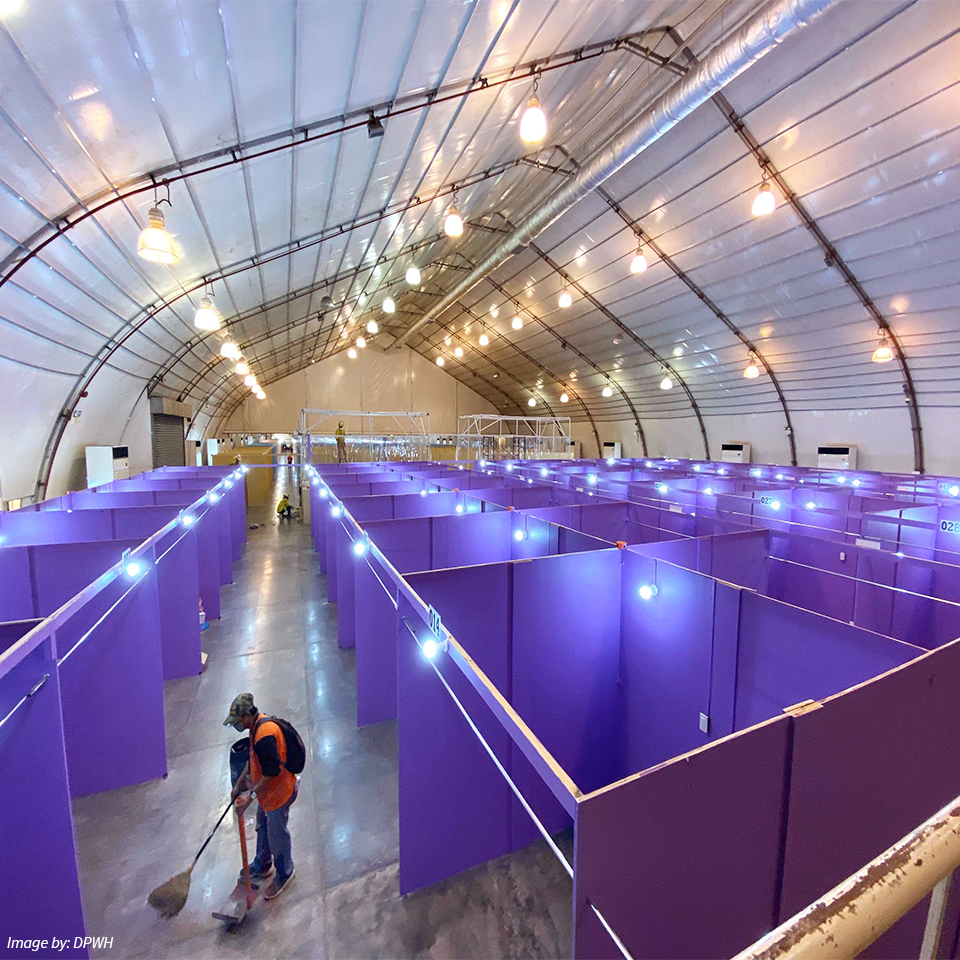
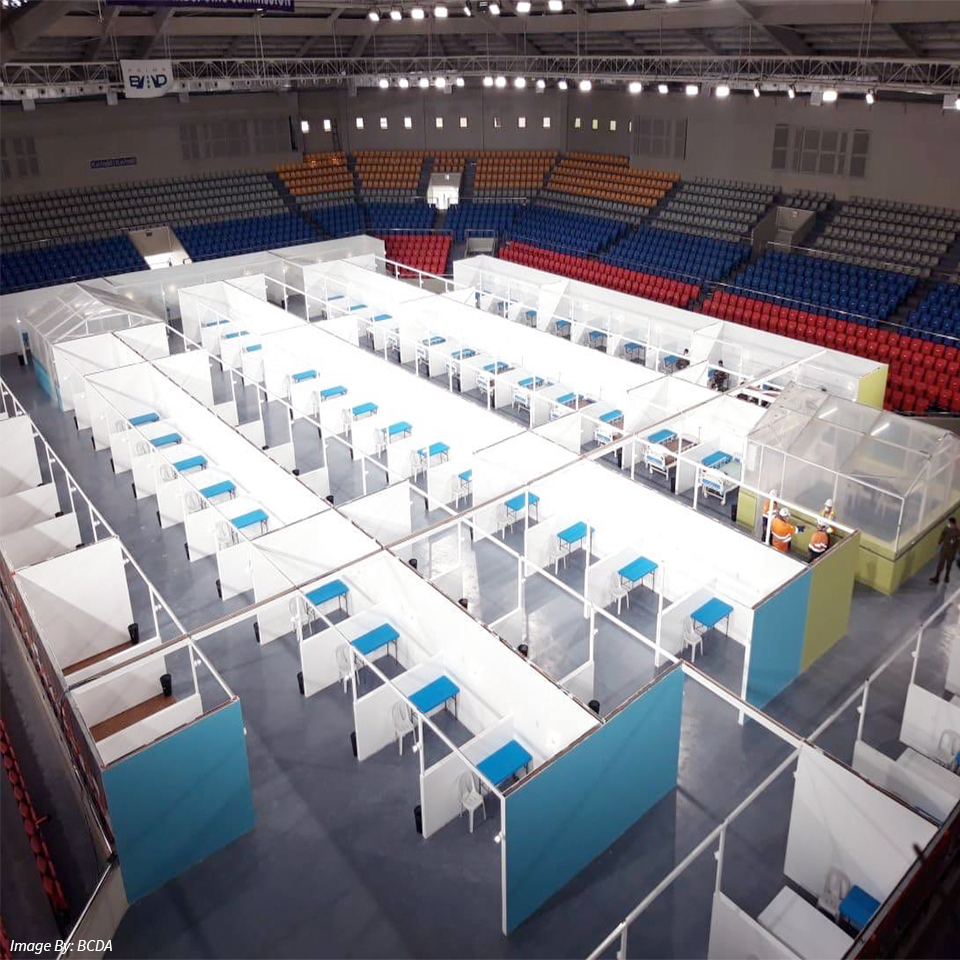
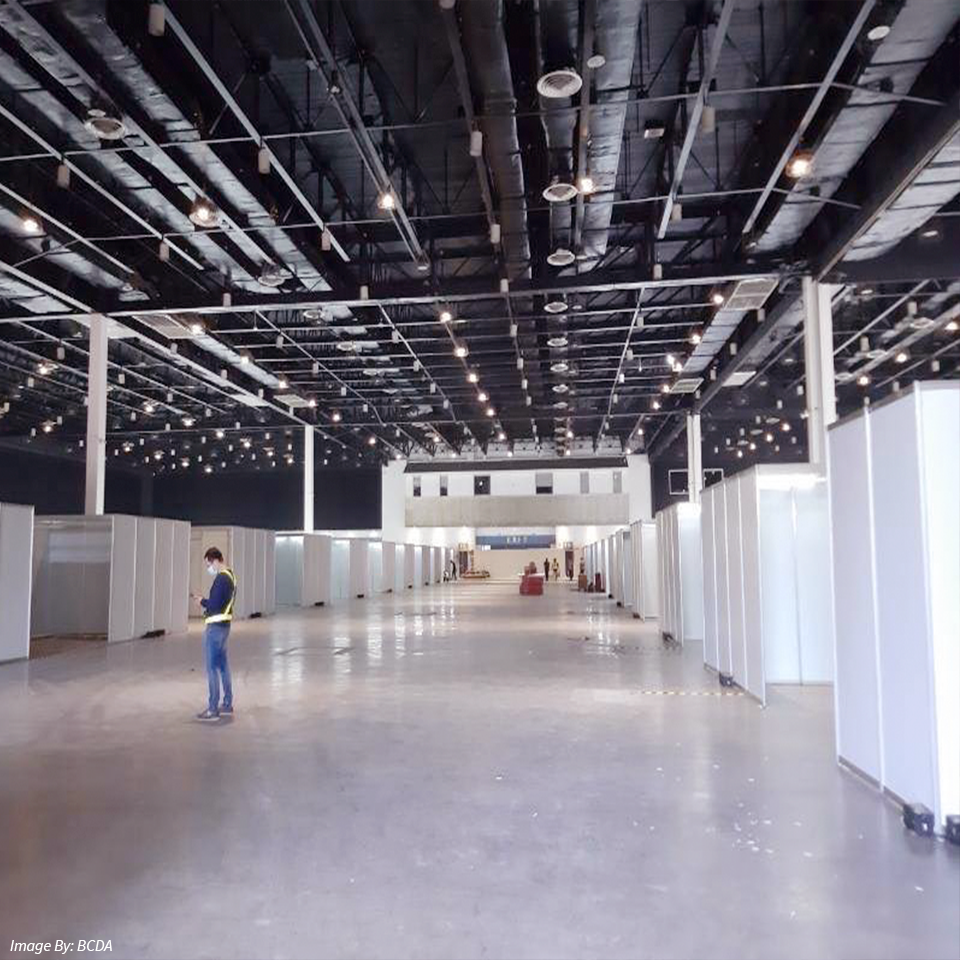
To address the perils involved with self-isolation and overcrowding of hospitals, the National Government, in collaboration with the private sector, is now converting large indoor facilities (most of which were primarily designed to host sports events, concerts, and conferences) into dedicated quarantine centers. Inter-Agency Task Force (IATF) Spokesperson Karlo Nograles said that placing the patients in these isolated quarantine facilities with single-room occupancy would ensure they avoid passing the virus to their family members and other communities.
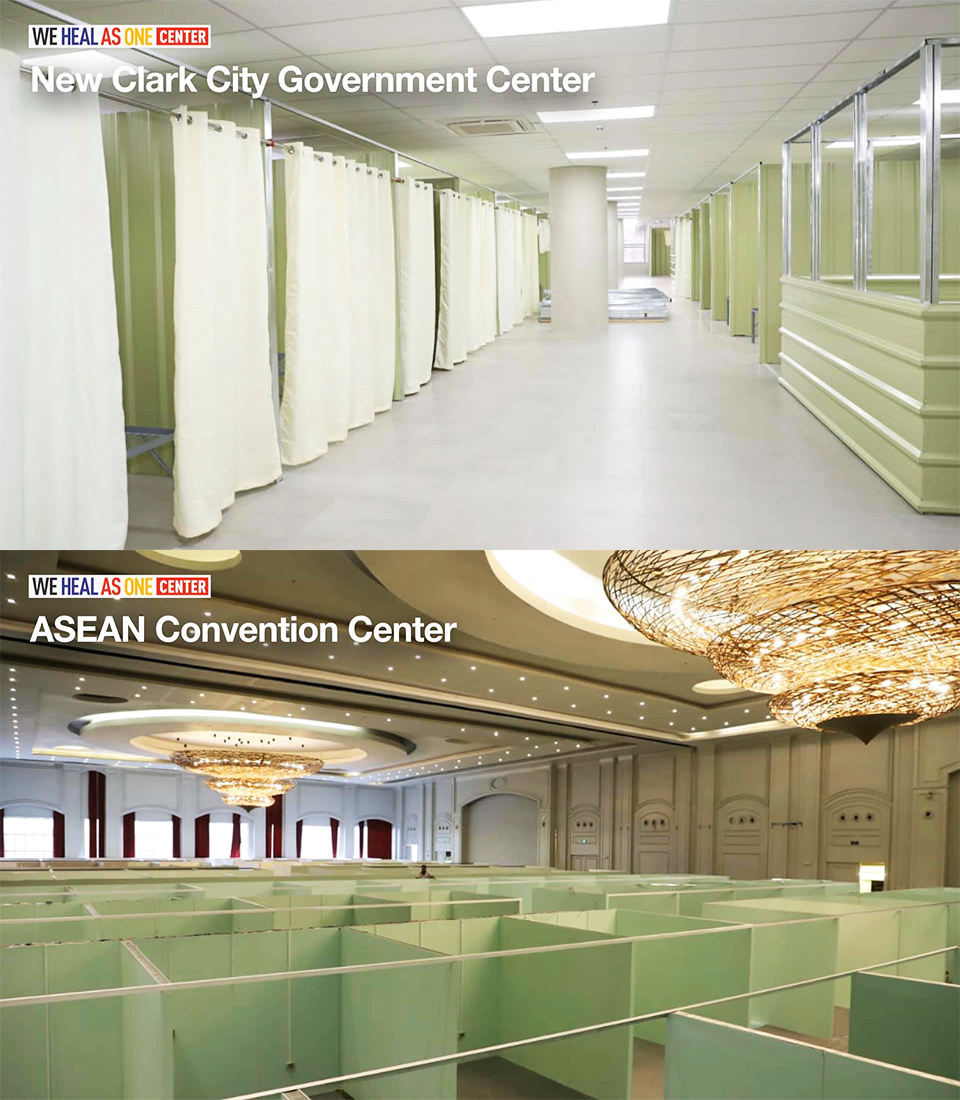
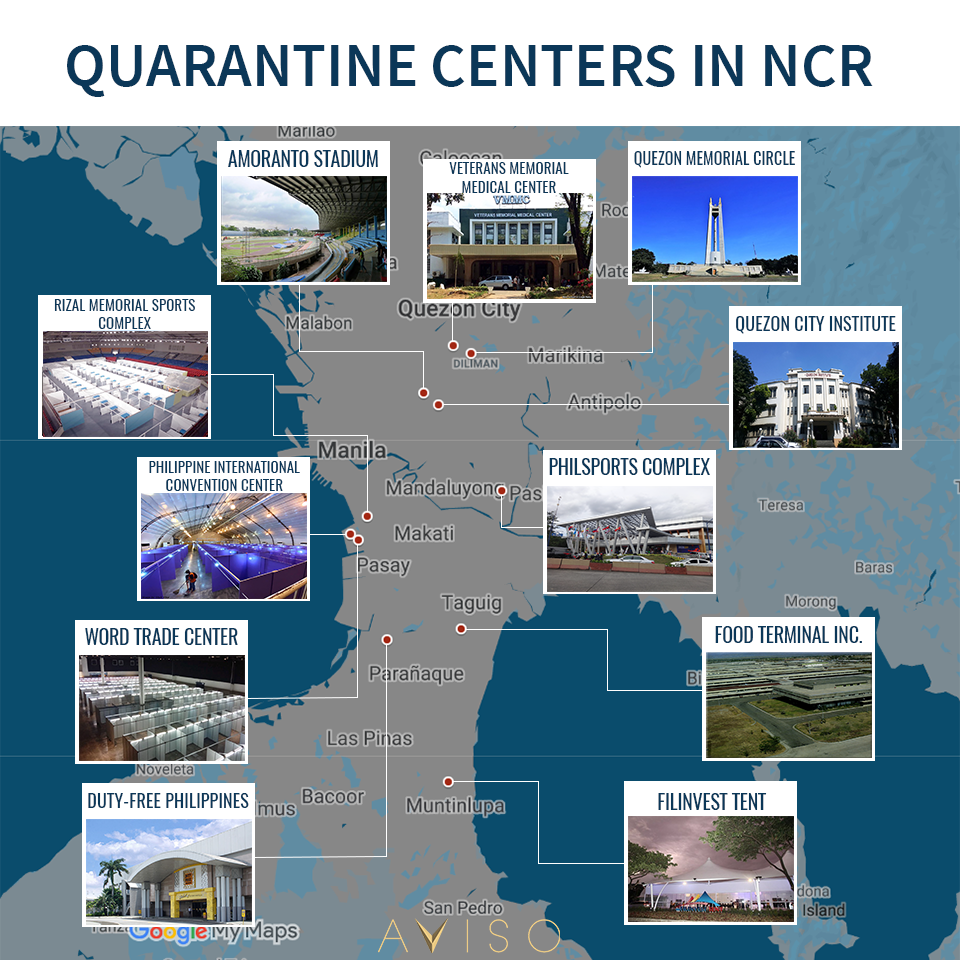
The designated quarantine centers would include the Rizal Memorial Sports Complex, Philippine International Convention Center (PICC), and World Trade Center with 600, 700, and 650 beds, respectively. These quarantine centers will all have air-conditioned cubicles with plug-in outlets, free food for patients and medical staff, free internet connection, and round-the-clock medical assistance. The government claims these facilities would be “more or less be ready” by April 14.
Other sites in Metro Manila also include the Amoranto Stadium in Quezon City, Quezon Institute, Quezon City Memorial Circle, Veterans Memorial Medical Center Complex, Duty-Free Philippines Paranaque, Food Terminal Inc. in Taguig City, Filinvest Tent in Muntinlupa City, and PhilSports Complex in Pasig City, according to Spokesperson Nograles.
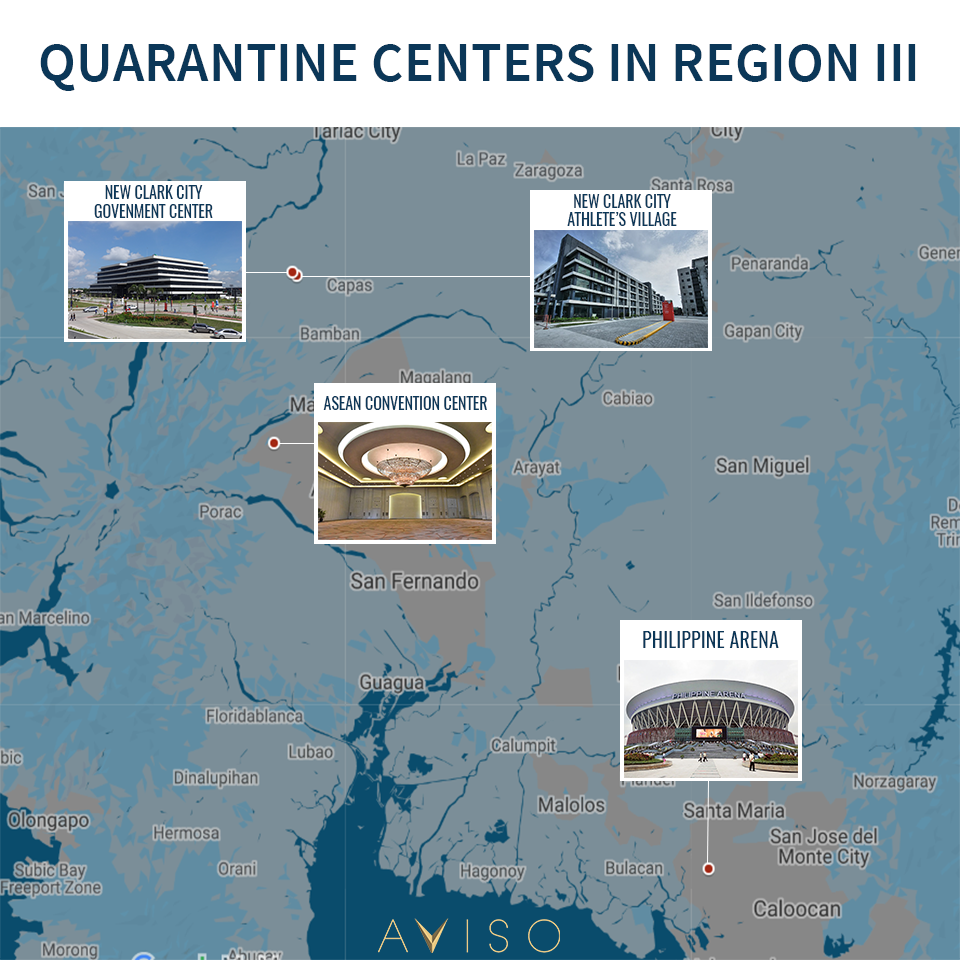
Outside the metro, The New Clark City Athlete’s Village, New Clark City Government Center and the ASEAN Convention Center will also be tapped as quarantine facilities. The religious group Iglesia Ni Cristo (INC) has also offered the use of the Philippine Arena in Bocaue, Bulacan as a quarantine facility. The world’s largest indoor arena will be transformed into a “mega quarantine facility” which can house suspected COVID-19 patients from Central Luzon. The same site, four months ago, held the opening of the 30th Southeast Asian Games.
How it will work:
According to the Department of Public Works and Highways (DPWH) Secretary Mark Villar, the COVID-19 Facilities will be divided into three zones: Contaminated, Buffer, and Sterile Zones. Contaminated Zone will serve as the area where patients are admitted or contained. Buffer Zone serves as an area for doffing of PPE, decontamination and hand hygiene, while Sterile Zone will be used as holding area, entrance, and for PPE donning of health workers.
“The idea is really twofold: we need these quarantine centers because we want to be able to move COVID-positive patients from their communities into facilities such as this. This was also done in other countries as well, but even equally important is we have to help our hospitals decongest, and allow more hospital beds to be used by more severe patients with COVID-19,” BCDA President and CEO and Presidential Adviser for Flagship Programs and Projects Vince Dizon said in a television interview.
It is expected that once the said facilities are converted and become operational, COVID-19 patients, PUIs, and PUMs who can no longer be accommodated by hospitals, may be transferred to these quarantine centers.
Lessons have indeed been learned from how other countries fared during this worldwide crisis. The construction and retrofitting of these facilities is a proactive measure in mitigating the risks of COVID-19 and its impact to the healthcare system of the country. It prevents the overstretching of existing hospitals’ capacities, which can result in avoidable deaths due to the lack of medical resources and facilities to care for critically ill patients.
Let us know what you think, engage with us on Facebook, LinkedIn, Twitter and Instagram.
Written by: Mary Grace Ladringan & Christian Tiongson
________________________________
Aviso Valuation and Advisory Corp. is a real estate consultancy firm that offers valuation and business advisory services compliant to international standards such as the International Valuation Standards (IVS) and International Financial Reporting Standards (IFRS). To assure that we only produce high-quality deliverables, as needed, we do tasks beyond the usual appraisal process like verifying pertinent property documents (i.e. land titles, tax declarations, etc.) with the appropriate government agencies for due diligence purposes prior the acquisition of the properties.