Written By: Roque M. Sorioso, Jr.
Abstract
This policy note examines the strategic background, institutional architecture, and projected economic implications of the Pax Silica Initiative as it pertains to the New Clark City development in Tarlac, Philippines. The 1,620-hectare site—designated an AI-native “Golden Node”—represents arguably the most consequential industrial policy intervention in Philippine economic history since the establishment of Special Economic Zones in the 1990s. The analysis is organized across four dimensions: the geopolitical framework underpinning the initiative; the multilateral and private-sector institutional architecture; the specific value-chain activities to be anchored on-site; and the national and regional development implications. The findings suggest that, if successfully operationalized, the Golden Node has the potential to catalyze a structural shift in the Philippines’ position within global semiconductor and advanced technology supply chains—though this transition is contingent on resolving significant infrastructure, human capital, and governance challenges.
Introduction and Strategic Context
The global semiconductor industry is undergoing a structural reconfiguration of historic proportions. Driven by supply chain disruptions, intensifying geopolitical competition, and the accelerating demand for advanced computing infrastructure, a growing coalition of allied nations has moved to diversify and “friend-shore” critical technology production away from geographically concentrated and potentially adversarial supply nodes. The Pax Silica Declaration, established in late 2025, is the institutional expression of this realignment.
The Philippines’ accession as the 13th signatory to the Declaration marks a pivotal moment in the country’s industrial development trajectory. For decades, the Philippines occupied a relatively peripheral position within the global semiconductor value chain, confined largely to back-end testing and assembly operations. The Pax Silica framework envisions a fundamental structural upgrade: the country is being repositioned as a vertically integrated node capable of processing indigenous mineral inputs, fabricating semiconductor wafers, and operating AI-calibrated manufacturing systems at scale.
This policy note draws on publicly available declarations, multilateral agency disclosures, and Philippine government pronouncements current as of April 2026. It is intended to provide a comprehensive and analytically rigorous assessment of the initiative for policymakers, development finance institutions, and strategic investors engaged with the evolving Indo-Pacific technology landscape.
Background and Strategic Vision
The Pax Silica Declaration
The Pax Silica Declaration is a United States-led multilateral framework aimed at constructing a secure, “trusted” supply chain for critical technologies encompassing semiconductors, advanced materials, and artificial intelligence systems. The initiative is not, in essence, a conventional trade agreement; it constitutes a strategic realignment of global technology production away from single-source concentration risk and toward a distributed network of allied nations operating under shared governance and security standards.
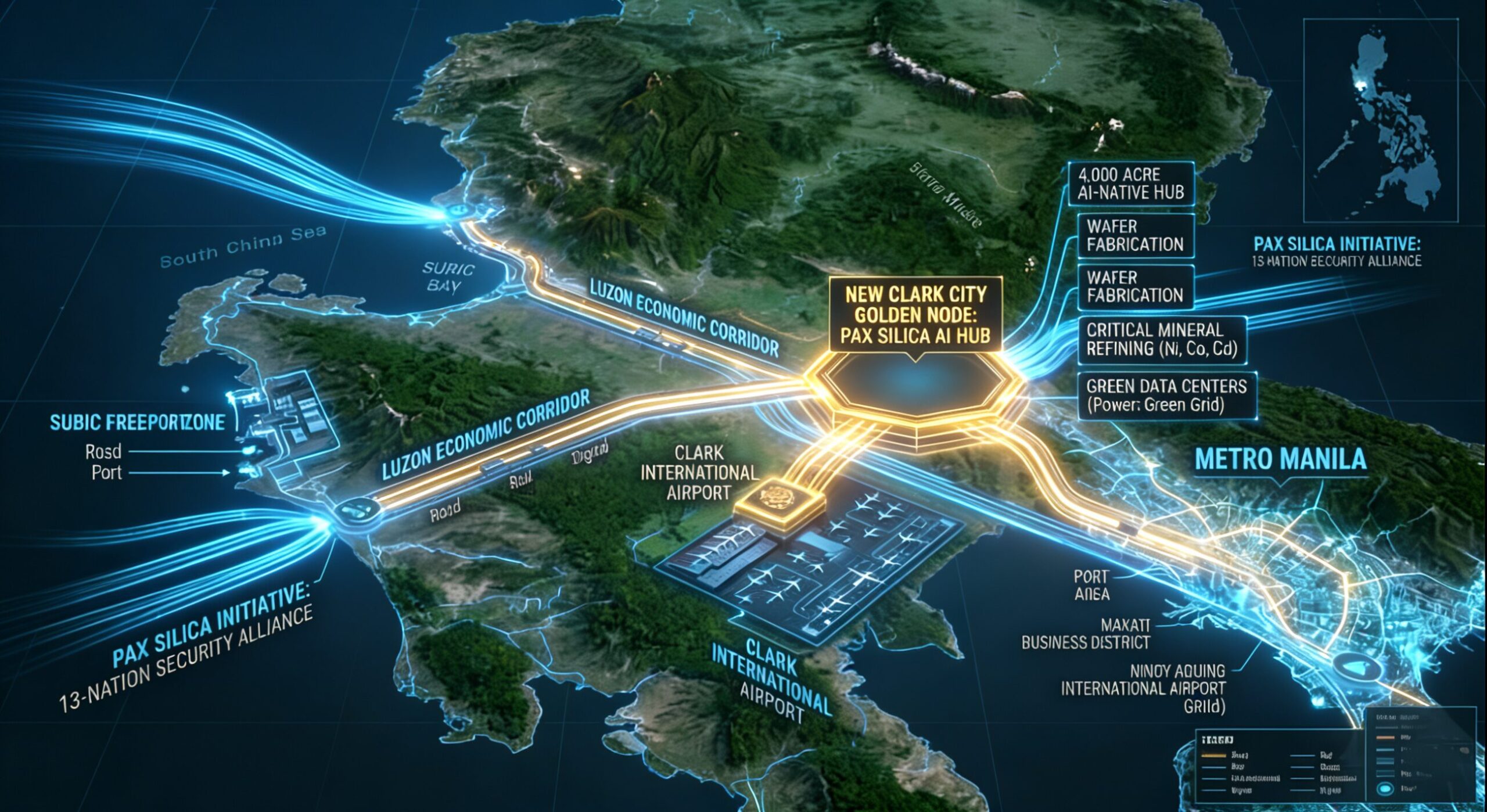
The Philippines’ membership carries considerable strategic weight, given the country’s geographic positioning within the Indo-Pacific theater and its established endowment of critical minerals—notably nickel, cobalt, and copper—that are essential inputs for battery production, microchip substrates, and advanced electronics manufacturing. The Luzon Economic Corridor—linking Clark International Airport, the Port of Subic, and Metro Manila—provides the physical infrastructure spine for this transformation.
New Clark City as the “Golden Node”
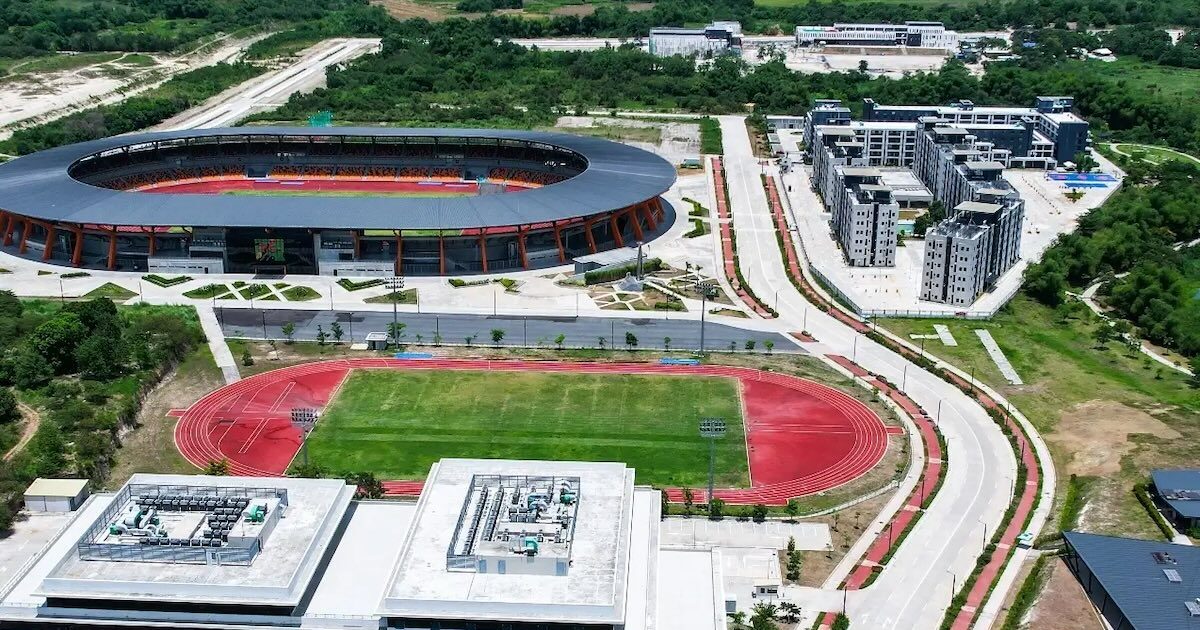
Photo by Bases Conversion and Development Authority
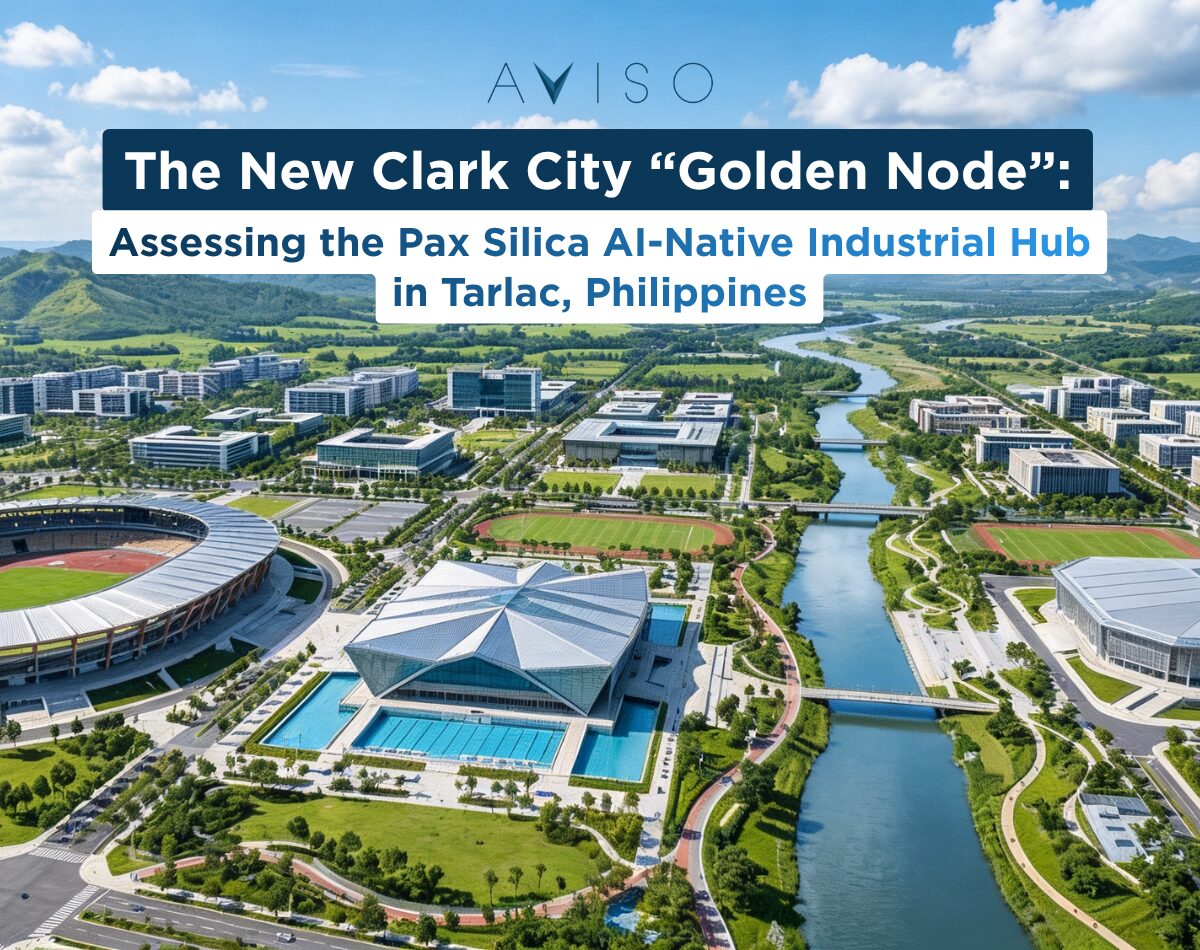
New Clark City is a 9,450-hectare master-planned development administered by the Bases Conversion and Development Authority (BCDA), originally conceived as a government administrative center and disaster-resilient alternative capital. The designation of approximately 1,620 hectares of this development as an AI-native industrial hub—the so-called “Golden Node”—signals a fundamental pivot in the development’s intended highest and best use.
The site’s advantages are structural rather than incidental. New Clark City sits within the Clark Special Economic Zone, which provides established fiscal incentive regimes, existing transport infrastructure, and a land bank of sufficient scale to accommodate campus-format industrial development of the kind that advanced semiconductor fabrication demands. The greenfield character of the site additionally eliminates the land amalgamation and informal-settlement relocation challenges that have historically complicated large-scale industrial projects in the Philippines.
Participant and Stakeholder Architecture
The Golden Node operates as a multi-layered partnership spanning sovereign governments, multilateral financing institutions, and specialized private-sector participants. This institutional architecture is deliberately tiered: the sovereign layer provides framework legitimacy and risk mitigation guarantees; the multilateral layer contributes technical assistance and concessional financing; and the private sector delivers execution capability and proprietary technology. This governance model broadly mirrors arrangements employed in analogous high-technology special economic zones across East Asia, including the early development phases of Shenzhen and Singapore’s Jurong Island complex.
Government and Multilateral Agencies
The institutional ecosystem underpinning the Golden Node is anchored by six principal entities, each occupying a distinct functional role within the initiative’s governance structure.
Table 1: Government and Multilateral Stakeholders
|
Entity |
Role and Responsibility |
| Bases Conversion and Development Authority (BCDA) | Philippine lead agency; landowner and master urban developer for New Clark City. Functions as the primary counterparty for sovereign lease agreements with foreign governments and multilateral bodies. |
| U.S. Department of State | Framework architect and diplomatic coordinator. Responsible for aligning Pax Silica policy objectives across the 13-nation alliance and managing bilateral implementation agreements. |
| U.S. International Development Finance Corporation (DFC) | Providing de-risking mechanisms, political risk insurance, and structured financing for critical infrastructure components within the hub. |
| Department of Trade and Industry (DTI) | Integrating the Golden Node with the National AI Strategy Roadmap and aligning fiscal incentive structures with existing Special Economic Zone frameworks. |
| Asian Development Bank (ADB) | Technical assistance provider for sustainable Special Economic Zone urban planning, environmental compliance frameworks, and climate-resilient infrastructure design. |
|
Japan International Cooperation Agency (JICA) |
Collaborating on mass transit connectivity and physical infrastructure, particularly rail and road linkages between Clark, Subic, and Metro Manila. |
Source: AVISO Valuation & Advisory Corporation, April 2026; BCDA and DTI public disclosures.
Private Sector and Industrial Participants
The private-sector layer of the Golden Node is organized across four functional verticals. Infrastructure partners—led by the U.S. Government serving as master lessee for internal road networks and high-capacity digital backbone systems—provide the foundational physical and digital connectivity upon which all other activities depend.
Technology and AI participants include semiconductor design houses and AI research institutions drawn from Pax Silica member nations, notably Australia, Canada, India, Japan, and the United States. These entities are expected to anchor the hub’s core value-generating activities: integrated circuit design, wafer fabrication, and trustworthy AI model development.
The energy and utilities vertical is structured around private green energy providers engaged to power the facility’s data centers with net-zero carbon footprints—a requirement that aligns with both ADB sustainability mandates and the increasingly stringent environmental, social, and governance (ESG) compliance expectations of institutional investors in the semiconductor space. The logistics vertical connects the site to regional freight and port infrastructure, principally the Port of Subic and Clark International Airport, through specialized operators.
It should be noted that specific corporate tenant identities remain subject to non-disclosure agreements pending the formal project launch in late 2026. The analysis presented in this note is accordingly based on disclosed institutional commitments and publicly reported framework agreements.
Core On-Site Activities and Value Chain Architecture
The Golden Node is designed to host a vertically integrated set of activities spanning the full silicon and AI value chain—from upstream mineral processing through midstream fabrication to downstream AI deployment. This vertical integration is deliberate; the strategic logic of the Pax Silica framework is predicated on reducing supply chain fragmentation across geographically dispersed and potentially adversarial jurisdictions.
Advanced Manufacturing
Semiconductor Design and Fabrication
The most structurally transformative activity planned for the Golden Node is the transition from the Philippines’ traditional back-end semiconductor role—principally manual testing and assembly—to Integrated Circuit (IC) Design and localized wafer fabrication capabilities. This transition, if successfully executed, would fundamentally alter the country’s position within the global semiconductor value chain. The Philippines has long served as a cost-competitive assembly node; the Golden Node envisions an upgrade to design-capable, fabrication-ready status, with commensurate implications for value capture, employment quality, and export sophistication.
Critical Mineral Refining
The Philippines possesses substantial endowments of nickel, cobalt, and copper—minerals that are critical inputs for battery production, microchip substrates, and advanced electronics. These resources have historically been exported in raw or semi-processed form, with refining and value addition occurring offshore. The Golden Node’s mineral refining cluster is designed to capture this value domestically, processing Philippine ores into high-purity precursor materials suitable for direct integration into the adjacent fabrication facilities.
The economic logic is straightforward. Every additional stage of processing retained onshore translates to higher employment multipliers, greater tax capture, and reduced exposure to commodity export price volatility. Realizing this potential is, however, conditional on resolving infrastructure constraints—particularly reliable power supply, water treatment capacity, and waste management systems—that are both energy-intensive and environmentally sensitive.
AI-Native Industrial Production
Beyond semiconductor fabrication, the Golden Node incorporates a production model described as “AI-native”—factories utilizing real-time AI sensor networks and automation systems to achieve high production yields with minimal defect rates. This is not merely a marketing designation; AI-integrated manufacturing is increasingly a prerequisite for meeting the quality and throughput standards demanded by the global semiconductor supply chain, where defect tolerances are measured in parts per billion.
Service and Research Infrastructure
The Golden Node’s service infrastructure complements its manufacturing core with four specialized facilities. The Pax Silica Coordination Office functions as the multi-nation policy alignment and supply chain monitoring center—the institutional coordination mechanism for the alliance’s Philippine operations. The Trustworthy AI Lab provides a dedicated facility for testing AI models within secure, sovereign data environments, responding to the growing international consensus that AI safety validation must occur within trusted jurisdictions.
Cybersecurity operations centers are tasked with defending the integrity of the technology supply chain—a function that reflects the Pax Silica framework’s fundamentally security-oriented character. Human Capital Development centers are charged with training Filipino engineers in advanced lithography, cleanroom operations, and AI system maintenance. This final element is perhaps the most consequential for long-term development impact: the formation of a domestic technical workforce capable of operating at the frontier of semiconductor technology is the necessary condition for the hub’s sustainability beyond the initial foreign investment cycle.
National and Regional Development Implications
Implications for the Philippines
The most immediate implication of the Golden Node is a structural shift in the composition of the Philippines’ industrial employment base toward high-wage technical occupations. The semiconductor and AI sectors command salary premiums substantially above the Philippine manufacturing average, and the geographic concentration of these jobs within a single corridor—linked to Clark, Subic, and Metro Manila via planned rail infrastructure—is expected to generate significant agglomeration effects.
In the language of development economics, the Golden Node represents a deliberate attempt to leap over the middle-technology trap that has constrained Philippine industrial upgrading for several decades. The initiative also creates long-term structural linkages with global high-technology markets. Once fabrication capacity is operational and supply chain relationships are established, switching costs for both the Philippines and its alliance partners become prohibitively high—a form of “lock-in” that functions simultaneously as a potential vulnerability and as a credible commitment mechanism that attracts sustained foreign direct investment.
Policy Observation
The Pax Silica framework introduces a geopolitical dimension to Philippine industrial policy that distinguishes the Golden Node from conventional Special Economic Zone models. The security overlay—encompassing cybersecurity mandates, supply chain monitoring, and trusted AI validation requirements—creates barriers to entry that function simultaneously as quality signals and strategic alignment mechanisms. Development partners should assess the implications of this security architecture for future program design and co-financing arrangements.
Asia-Pacific Regional Impact
At the regional level, the Golden Node establishes what may be characterized as a “strategic buffer” within the Indo-Pacific—a secure alternative for semiconductor fabrication and mineral processing that reduces regional dependence on non-allied supply chains. The geographic positioning of the Philippines makes it a logical anchor point for the alliance’s Southeast Asian operations, and the initiative has the potential to catalyze analogous developments across other Pax Silica member nations.
The resulting regional architecture would resemble less a conventional hub-and-spoke model and more a distributed mesh network: redundant by design, resilient by necessity. For regional multilateral development institutions, this configuration presents both opportunities for co-investment and mandates for enhanced policy coordination across the Indo-Pacific technology corridor.
Sources and References
The following sources informed the analysis presented in this note. All references are current as of April 2026.
Table 2: Key Sources
|
Source |
Title / Description | Date |
| Bases Conversion and Development Authority (BCDA) | New Clark City to serve as AI hub under US-led Pax Silica Initiative | April 2026 |
| Institute for Security & Development Policy | Changing Geometries: The Rise of a Middle-Power Tech Triangle | March 2026 |
| Philippine News Agency (PNA) | Planned AI industrial hub to support operations of high-tech firms | April 2026 |
| W.Media | Philippines earmarks 4,000-acre land as AI hub under US-led Pax Silica | April 2026 |
|
Observer Research Foundation |
Future-Proofing Semiconductors and Critical Minerals |
March 2026 |
About AVISO Valuation & Advisory Corporation
AVISO Valuation & Advisory Corporation is a collaborating firm of Andersen Global. The corporation provides independent valuation, advisory, and strategic research services to government agencies, multilateral institutions, and private-sector clients across the Philippines and the broader Asia-Pacific region.