The Travel and Tourism industry is one of the largest casualties of the pandemic – with flights being cancelled, hotels remaining closed, and travel constraints being imposed in mostly all countries globally. As travel restrictions remain in place, COVID-19 has interrupted travel plans worldwide as lockdown measures keep much of the world’s population at home during some of the peak seasons for traveling.
With the spread of COVID-19 over 206 countries and territories around the world, and cases soaring to nearly 5,100,000 in just five months, a couple of questions come to mind: What would a post-pandemic world look like for the tourism industry? How would the travel sector recover from this crisis?
This economic sector contributes 10.4 percent to the global Gross Domestic Product (GDP). Locally, it accounts for 24.7 percent of the Philippines’ GDP. Its contribution to the local economy led to a 5.4 million increase in employment last 2018, 1.8 percent higher than the 5.3 million in 2017.
The World Travel and Tourism Council (WTTC) advised that COVID-19 could put 50 million jobs in the travel and tourism industry worldwide at risk, with Asia being the worst affected region. Furthermore, the National Economic and Development Authority (NEDA) estimates that the country will experience a 10 percent drop in foreign tourists until June 2020 due to the restrictions of the enhanced community quarantine (ECQ), and a 100 percent decline in foreign tourists and airline revenues for a duration of one month.
.
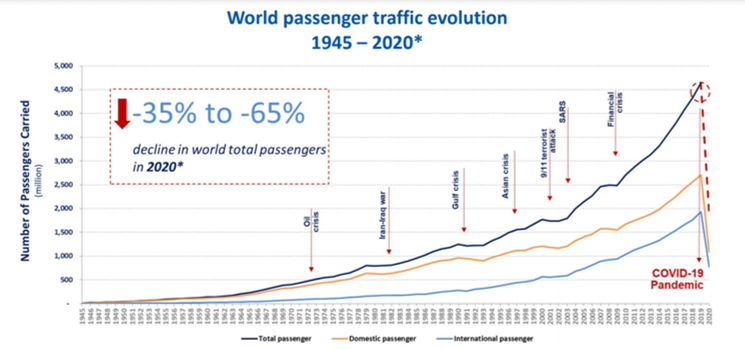
Figure 1: The evolution of world passenger traffic
Source: ICAO Air Transport Reports and Estimates
The effects of the outbreak and subsequent quarantine measures are predicted to incur significant losses in the country’s total gross value added, amounting to Php 298 Billion – Php 1.1 Trillion, which is equivalent to 1.5 to 5.3 percent of the GDP. This deceleration in economic activity may reduce employment by about 33,800 to 56,600. The reduction in employment coupled with decreased foot traffic in public spaces and potential closure of business establishments are bound to negatively impact the Travel and Tourism sector.
It could take up to 10 months for the industry to recover and return to its “normal levels”, according to WTTC. Large-scale quarantines, travel restrictions, suspension of mass transportation and social-distancing measures drive a sharp fall in consumer and business spending. Once the pandemic subsides, consumers will recalibrate their spending habits, increasing the likelihood that spending may permanently shift between categories. Demand for food, medical assistance and other essential items may rise, but this would be offset by lower demand and willingness to spend on non-essential goods such as apparel and other services, including travel.
Once COVID-19 is successfully contained, it is expected that travel bans would be lifted. A publication from Statista indicated that among people in the Asia Pacific region in 2020, the Philippines ranks third among the most anxious countries over COVID-19. That being said, the lifting of travel bans may not be enough to encourage would-be travelers as they may still experience anxiety in visiting foreign destinations leading them to stay at home or travel locally.
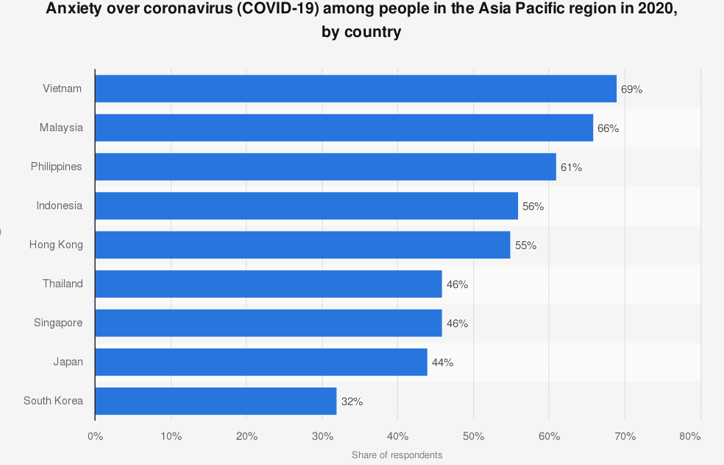
Figure 2: Asia Pacific Anxiety over COVID-19
Source: Statistica
Based on the Household Survey on Domestic Visitors (HSDV) conducted by the Philippine Statistics Authority (PSA) and Department of Tourism (DOT) last 2018, the average age of domestic and foreign Filipino travelers is about 15 to 45 years old. This is a mix of those entering the labor market after obtaining formal education and those in their prime working age.
It may be inferred that the majority belongs to the working class and those with the capacity to travel. Consequently, they drive the demand for travel higher as compared to the other age groups. Should this class be affected by the pandemic crisis, their disposable income which was previously apportioned to travel and leisure may now be reallocated to health care, insurance, and emergency funds.
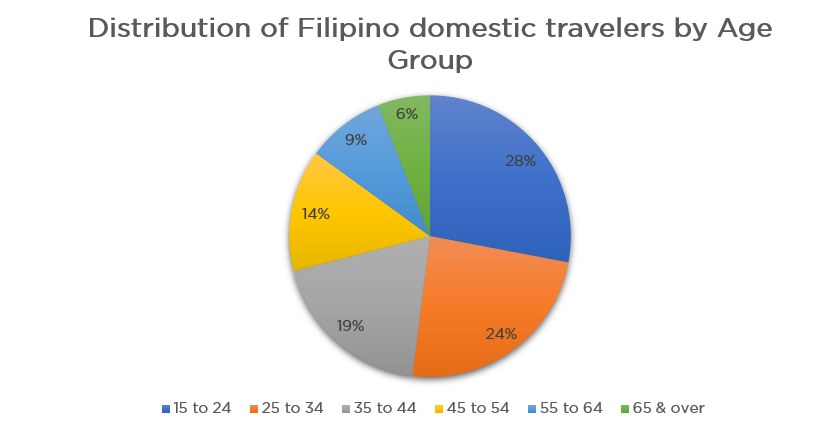
Figure 3: Distribution of Filipino domestic travelers by Age Group
Source: 2016 Household survey on domestic visitors, PSA
Another perspective on the effects of COVID-19 is that despite the projected loss of roughly $9.3 billion worth of foreign currency inflows, the peso has remained relatively stable. The explanation for this could be that the projected loss of tourist receipts will be offset by the reduction of foreign exchange outflows from Filipino outbound tourists, according to ING Bank Manila. Furthermore, although COVID-19 will likely slow the influx of foreign tourists to the Philippines, potentially costing around $9 billion in lost tourism receipts, the virus will also likely ground outbound Filipino tourists, helping to keep much-needed foreign currency onshore.
Being a large contributor to the country’s GDP and a major job creator, travel and tourism must bounce back and recover from the crisis. One way to contribute to this recovery is to reassure travelers that hygiene, safety, and public health is now one of the industry’s top priorities. Support from the private sector is essential to push the profit curve upward and to recover from the losses incurred because of the pandemic. In addition to this, the government must take actions to mitigate the effects of the pandemic on the country’s tourism industry and create a sustainable tourism development strategy in order for the industry to remain resilient amidst the next global health crisis.
Written by: Hanah De Vera
Aviso Valuation and Advisory Corp. is a real estate consultancy firm that offers valuation and business advisory services compliant to international standards such as the International Valuation Standards (IVS) and International Financial Reporting Standards (IFRS). To assure that we only produce high-quality deliverables, as needed, we do tasks beyond the usual appraisal process like verifying pertinent property documents (i.e. land titles, tax declarations, etc.) with the appropriate government agencies for due diligence purposes prior the acquisition of the properties.
_________________
Sources:
https://www.worldometers.info/coronavirus/
https://news.mb.com.ph/2018/10/04/42m-filipinos-are-domestic-tourists/
https://think.ing.com/snaps/philippines-covid-to-slow-tourist-arrivals..and-filipino-jetsetters-too/