Written By: Angelo M. Gandia, MBA
What the Provincial Development Planning (ProvDP) Framework, launched by DEPDev on 13 October 2026, means for development outcomes, project readiness and investment advisory in the Philippines
Planning Has Never Been the Scarce Resource
The Philippines does not lack plans. It has a national Philippine Development Plan, regional development plans, local development plans and a long tradition of comprehensive land use planning. What it has lacked, in many provinces, is a reliable bridge between those plans and the decisions that actually allocate money: which projects enter the annual budget, which are funded to completion, and which are tracked afterwards to see whether they changed anything.
On 13 October 2026, the Department of Economy, Planning, and Development (DEPDev) launched the Provincial Development Planning (ProvDP) Framework to build that bridge. As reported at launch, the framework requires provincial governments to adopt six-year development plans that align local priorities, public investments and budgets. It was developed with ADB support and builds on the 2007 Provincial and Local Planning and Expenditure Management (PLPEM) guidelines, informed by an assessment covering about 90% of provinces.
The timing matters. Both ADB and the World Bank have trimmed their 2026 forecasts for the Philippines, and inflation is running above target (Figure 1). Under these conditions, every peso of public investment has to work harder, and the cost of a poorly sequenced or unfunded project is higher.
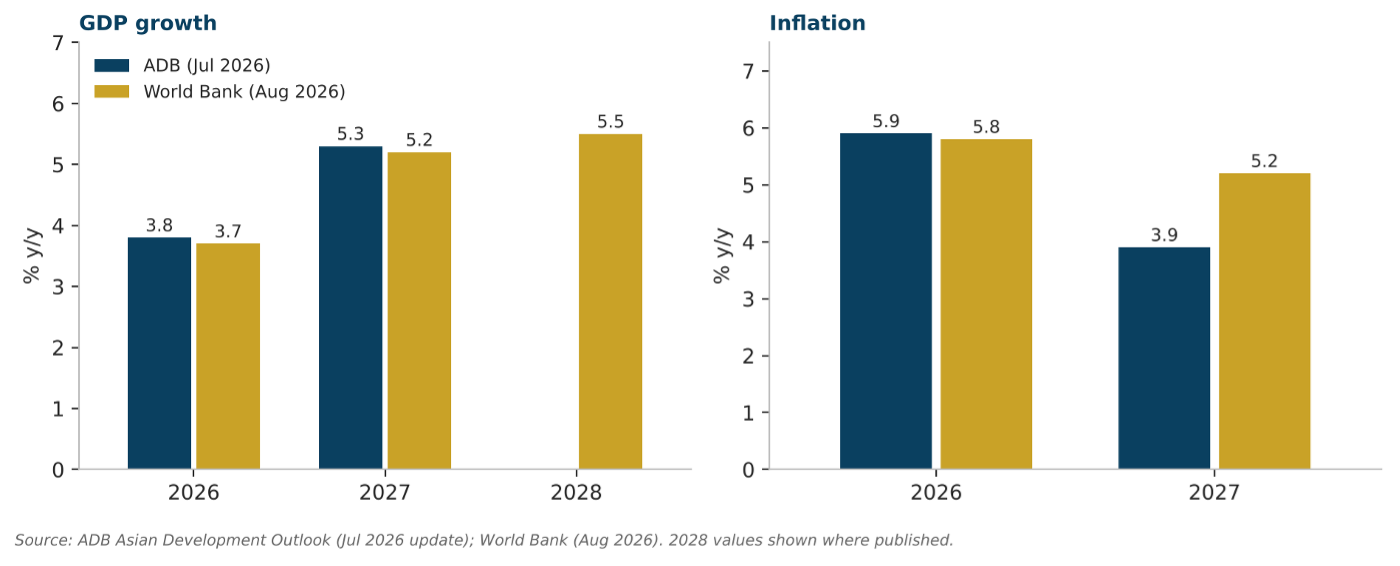
Figure 1. ADB and World Bank macroeconomic projections for the Philippines
ADB (July 2026 update) projects growth of 3.8% in 2026, recovering to 5.3% in 2027, with inflation of 5.9% and 3.9%. The World Bank (August 2026) projects 3.7%, 5.2% and 5.5% for 2026 to 2028, with inflation of 5.8% in 2026 and 5.2% in 2027, citing weak investment and constrained consumption and expecting public investment to recover only gradually. Headline inflation per the Philippine Statistics Authority (PSA) was 6.4% in June 2026, after 6.8% in May and 7.2% in April, and the Bangko Sentral ng Pilipinas (BSP) has been tightening policy. The BSP policy rate is reported at about 5.00%, and market analysts anticipate a further 25-basis-point increase in October.
Dissecting the Framework
The ProvDP Framework is best understood as a chain of four linked instruments, supported by a feedback loop (Figure 2). Each instrument answers a different question: where is the province going, what will it build, what will it fund this year, and where will it be located.
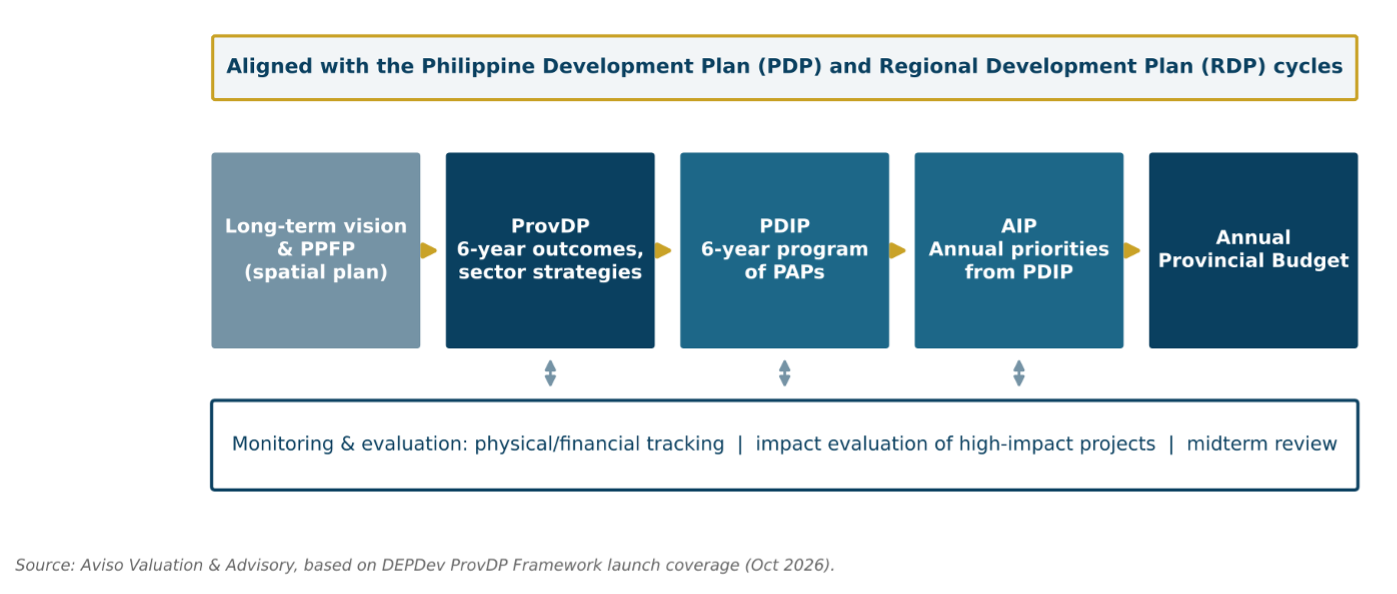
Figure 2. The ProvDP planning-to-budget chain
Table 1. Components of the ProvDP Framework
|
Component |
What it is | Why it matters |
|
ProvDP |
Medium-term (six-year) socioeconomic plan translating the province’s long-term vision into measurable outcomes and sector and subsector strategies. |
Gives provincial leaders a results framework with targets, rather than a list of projects. |
|
PDIP |
Provincial Development Investment Program: a six-year program of programs, activities and projects (PAPs) that implements the ProvDP. | Converts strategy into a costed pipeline. This is the list from which investors, lenders and agencies can see what is coming. |
|
AIP |
Annual Investment Program: each year’s priorities, drawn from the PDIP, forming the basis of the annual budget. |
Forces annual budgeting to follow the plan, so that funded projects are those already prioritized. |
| PPFP | Provincial Physical Framework Plan: a complementary long-term spatial framework. |
Anchors investments in land use, hazards and settlement patterns; critical for siting infrastructure. |
| Monitoring, evaluation and midterm review | Funded projects are tracked for physical and financial performance; critical or high-impact projects may receive impact evaluation. A midterm review may revise, keep, add or drop strategies, or recalibrate targets. |
Creates a learning loop. Plans can be corrected against outcomes and indicators, not only inputs. |
Source: Aviso synthesis of launch coverage of the DEPDev ProvDP Framework (Philippine Daily Inquirer, 13 October 2026). See Data Notes.
Three design choices deserve emphasis. First, the framework is outcome-first: the province sets outcomes, then the PDIP identifies projects, then the AIP and budget fund them. Second, provinces are encouraged to align the initial ProvDP period with the PDP and Regional Development Plan cycles, which reduces the mismatch between national, regional and provincial priorities. Third, DEPDev commits to dissemination, technical assistance and capacity-building, an acknowledgment that adoption, not design, is the binding constraint.
“Provinces confront the challenge of translating national and regional priorities into a coherent provincial agenda.” Secretary Arsenio Balisacan, DEPDev, at the framework launch.
The Hurdles the Framework Is Meant to Address
The plan-to-budget disconnect
Since 2023, more than 1,000 regional priority projects have been proposed for the Public Investment Program (PIP). Only 438 received funding in the FY2025 and FY2026 General Appropriations Acts. DEPDev and the Department of Budget and Management (DBM) are promoting a “One Process, One Calendar and One System” approach, and DBM has said it will give premium to projects that have gone through proper planning, while projects absent from PIP Online face scrutiny. The ProvDP-PDIP-AIP chain is the provincial-level counterpart of that discipline: it gives a province’s own project list a defined route into the budget.
Uneven development across regions
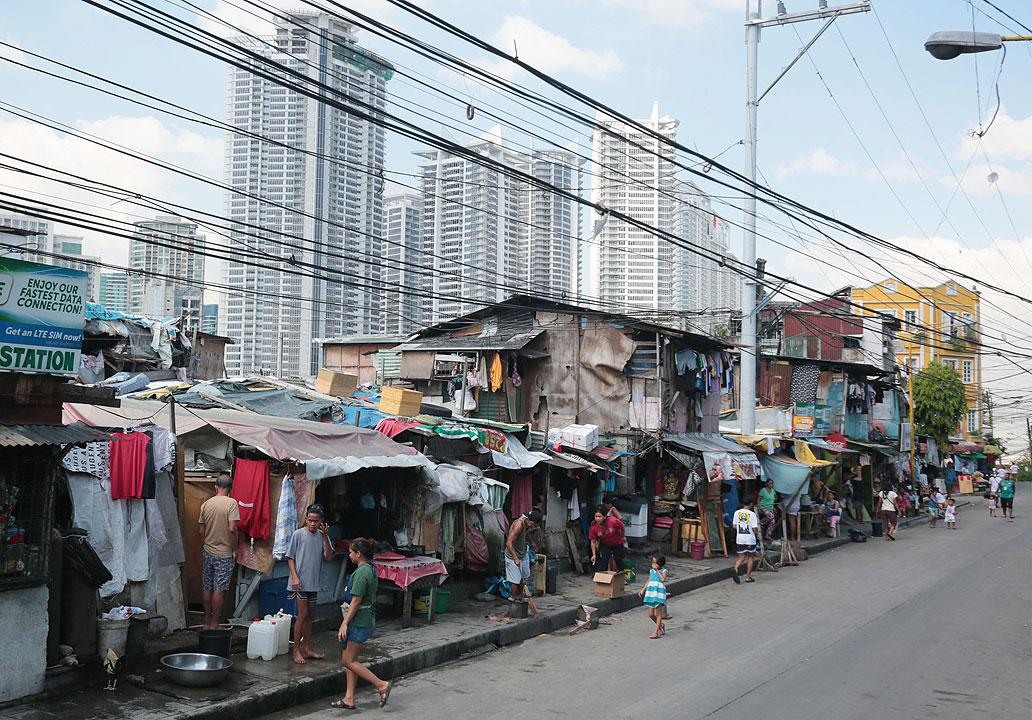
PHOTO: PHILIPPINE STAR/ MICHAEL VARCAS
PSA’s 2023 poverty statistics show a national family poverty incidence of 10.9%, down from 13.2% in 2021, against a threshold of about PHP 13,873 per month for a family of five. Behind the average is a wide spread (Figure 3). The National Capital Region recorded 1.1%, while Region IX recorded 24.2%, followed by BARMM at 23.5% and the Negros Island Region at 22.6%. MIMAROPA, the Negros Island Region and Region IX saw incidence rise between 2021 and 2023. Rural poverty (22.1% of the population) was more than double the urban rate (10.3%), and PSA’s small area estimates show that 881 of 1,611 cities and municipalities had incidence of 20% or lower, which means about 730 did not.
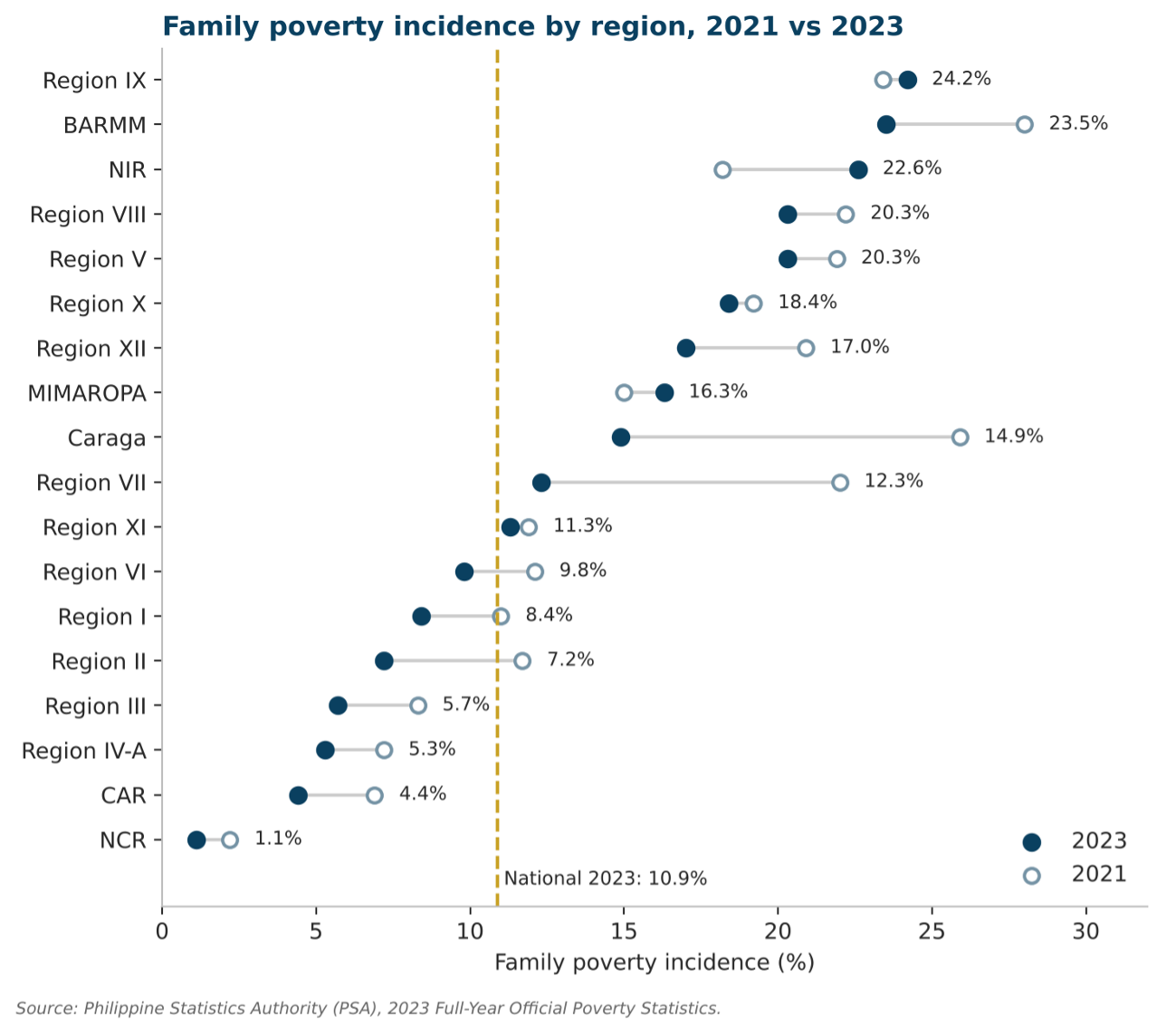
Figure 3. Family poverty incidence by region, 2021 and 2023
The top ten LGUs account for about 36.5% of GDP, and Luzon contributes more than a third of the national total. Sensitivity to this concentration is what Secretary Balisacan was pointing to when he said the Philippines cannot afford development concentrated in a few areas while others lag. A province-level results framework with measurable outcomes gives lagging provinces a way to define, fund and defend their own catch-up agendas.
A fiscal windfall that outpaces capacity
Following the Mandanas-Garcia ruling, the National Tax Allotment (NTA) rose by 38% (PHP 263.5 billion) in 2022, according to the Philippine Institute for Development Studies (PIDS), which also stressed that LGUs need capacity-building for re-devolved functions. The trend has continued. Reports on the 2027 budget put the NTA at PHP 1.19 trillion, PHP 129.32 billion higher than 2026, with reported provincial and city shares of PHP 303.56 billion each, municipalities PHP 448.84 billion and barangays PHP 263.97 billion. The 2026 Local Government Support Fund is a record PHP 57.87 billion. (These component figures sum to roughly PHP 1.32 trillion, which matches other reports of a PHP 1.32 trillion local share in 2027 but not the PHP 1.19 trillion headline; see Data Notes.) Larger transfers without a binding plan raise the risk of fragmented, small-ticket spending. The PDIP and AIP give provincial boards and local development councils a common instrument for prioritizing that money.
Thin LGU participation in PPPs
As of 4 May 2026, the PPP Center’s pipeline stood at 252 projects worth PHP 3.16 trillion. National government agencies sponsor 168 of these, worth PHP 3.02 trillion, while LGUs sponsor 84 projects worth PHP 136.26 billion. By Aviso’s calculation, LGUs therefore hold about one-third of the project count but only about 4.3% of the value (Figure 4). Transport accounts for 94 projects and property development for 46, and most projects sit in the National Capital Region, Central Luzon and Ilocos.
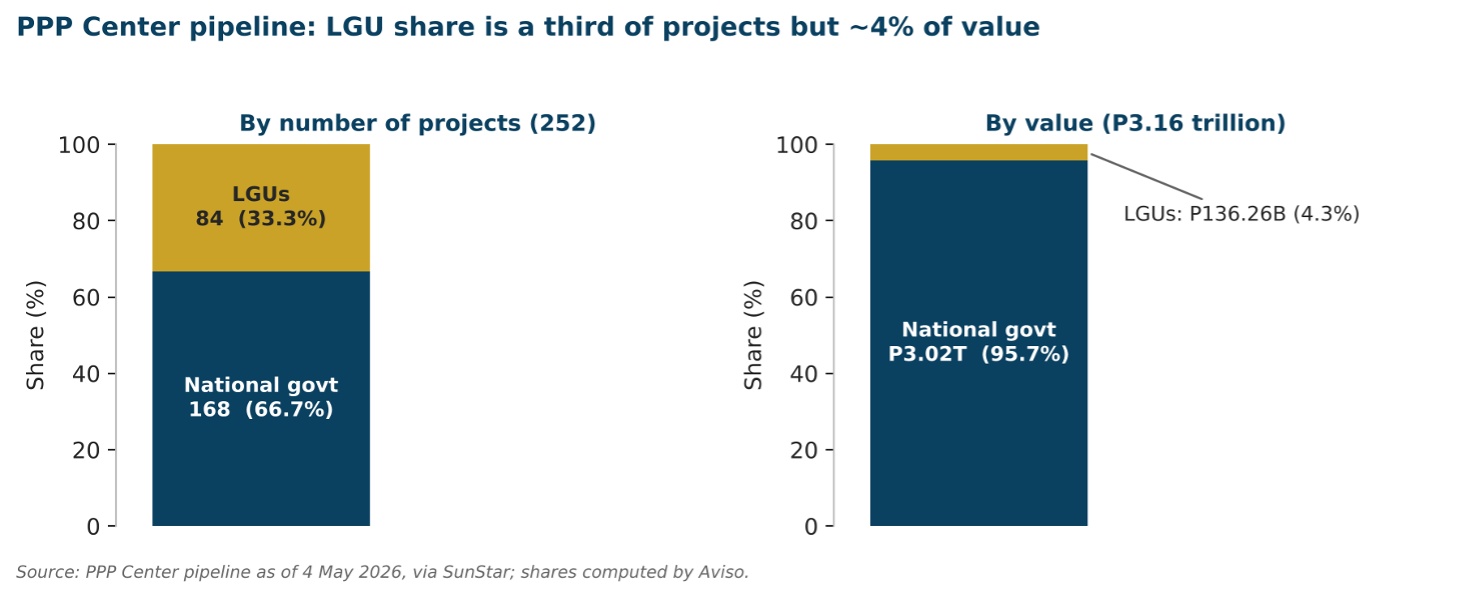
Figure 4. National government and LGU shares of the PPP pipeline
Small LGU projects are not a problem in themselves, but a pipeline of small, unprogrammed and unevenly prepared projects is hard to finance. A six-year PDIP gives provincial sponsors a visible, costed list; the PPFP supplies the spatial basis for site selection; and the midterm review offers a point at which PPP candidates can be added once readiness improves.
A tighter macro and financing environment
With growth below 4% in 2026 and policy rates elevated, concessional and market financing will be selective. The reclassification of the Philippines to upper-middle income status on 1 July 2026 (GNI per capita of US$4,850) also narrows access to some concessional windows, increasing the importance of project readiness. Projects that arrive with evidence of strategic alignment, a funding line and a monitoring plan are likelier to be financed.
How Each Element Answers a Hurdle
Table 2. Hurdle, ProvDP feature, expected benefit and indicator
|
Hurdle |
ProvDP element | Expected benefit | Indicator to track |
|
Plan-budget disconnect (438 of 1,000+ regional projects funded) |
PDIP and AIP | Projects enter the budget through a defined, planned route; fewer ad hoc insertions. | Share of AIP projects drawn from the PDIP; share of PDIP PAPs funded |
|
Regional and provincial inequality (1.1% to 24.2% poverty) |
ProvDP outcomes and sector targets | Lagging provinces set measurable catch-up outcomes aligned with regional plans. | Provincial poverty incidence (PSA SAE); outcome indicators in ProvDP |
|
Fiscal windfall vs. capacity |
PDIP, technical assistance, capacity-building | Larger NTA is directed to prioritized, costed PAPs. |
NTA utilization; share of development fund in PDIP-listed projects |
| Thin LGU PPP pipeline (4.3% of value) | PDIP, PPFP, midterm review | Visible pipeline; sites tied to land use; PPP candidates screened and added over time. |
Number of LGU PPP projects reaching structuring and award |
| Weak monitoring and unclear results | Physical and financial monitoring; impact evaluation | Evidence on delivery and outcomes, with course correction. |
Physical and financial accomplishment rates; completed evaluations |
| Misaligned cycles across governance levels | Alignment with PDP and RDP periods | Provincial priorities reflect regional and national ones. |
Provinces with ProvDP periods matched to PDP and RDP |
| Macro squeeze (growth below 4%, high inflation) | Sequencing via PDIP and AIP; midterm recalibration | Spending is staged and reprioritized as conditions change. |
Cost escalation vs. approved cost; revisions at midterm |
Source: Aviso analysis. Hurdle data from PSA, PPP Center (via SunStar), DEPDev and DBM statements (via SunStar), and PIDS. Expected benefits are Aviso’s assessment, not published targets.
Benefits, Risks and Implementation Caveats
The framework’s potential benefits are clear: coherent provincial agendas, a predictable investment pipeline, better use of larger LGU transfers, and a base for evidence-based adjustment. The benefits will not arrive automatically, however, and the following risks deserve attention.
- Compliance vs. substance. A plan can be adopted and then ignored. The value of the chain depends on whether sanggunian approvals, AIPs and budgets actually follow the PDIP.
- Provincial planning offices vary widely in staff and data. Technical assistance will need to reach the provinces that most need it, which are often those with the highest poverty.
- Intra-provincial coordination. Provinces are required to plan, but cities and municipalities carry many of the delivered functions. The ProvDP will have to be reconciled with city and municipal plans and with barangay-level needs.
- Outcome indicators need baselines at the provincial level. PSA’s small area estimates help, but frequency is limited.
- Macro volatility. Six-year programs can be overtaken by price shocks. The midterm review should be used to recalibrate, not only to report.
Adopting the ProvDP Framework
For Aviso, the ProvDP Framework turns the public planning record into a usable evidence base. A project that is named in a province’s ProvDP, costed in its PDIP and scheduled in its AIP carries a stronger public commitment than one that is not, and the same documents describe the demand drivers, the competing public investments and the land use rules that surround it. The framework therefore informs each of Aviso’s four service lines (Table 3).
Table 3. Application of ProvDP to Aviso service lines
|
Service |
How ProvDP, PDIP, AIP and PPFP are used | Output for the client |
|
Valuation |
Check whether enabling infrastructure (roads, ports, water, flood control) is in the PDIP or AIP and funded; test land-use consistency against the PPFP; reflect probability and timing of public investment in highest-and-best-use analysis and risk premiums. |
Defensible uplift assumptions; documented basis for timing of value realization. |
|
Market study |
Anchor demand drivers on ProvDP outcome targets (jobs, tourism, housing, urbanization); map competing public and private supply; use provincial indicators as baseline. |
Demand forecasts tied to published provincial targets, with scenarios if PAPs slip. |
|
Feasibility study |
Apply a ProvDP alignment screen (Table 4) before design; use PDIP costing and AIP timing to set phasing and funding sources; identify evaluation indicators for later monitoring. |
Readiness rating; phasing and financing plan; alignment evidence for lenders. |
| PPP transaction advisory | Use the PDIP as a source of PPP candidates; test fit under the PPP Code (RA 11966) and LGU PPP rules; use the PPFP for site and hazard due diligence; align the procurement timetable to AIP and budget cycles; use the midterm review as a window to add or repackage projects. |
Bankable LGU PPP structures; reduced approval and budget risk; better-timed procurement. |
Source: Aviso Valuation & Advisory.
In practice, Aviso can add three things for clients. First, an alignment memorandum at the start of each engagement, reporting where a project stands in the ProvDP chain. Second, advice to LGU clients on preparing PDIP entries that are ready for financing, including PPP candidates, in step with their AIP and budget calendars. Third, for private sponsors, an early read of which provinces are building credible pipelines, to inform site selection and timing.
The ProvDP Framework addresses a long-standing weakness in Philippine development: plans that do not translate into funded, monitored projects. In a year of slower growth, higher inflation and larger local transfers, the discipline it introduces is timely. Its success will depend on adoption, capacity and the willingness of provincial leaders to use the midterm review to course-correct.
- LGU clients: Prepare PDIP entries early, cost them realistically, and flag PPP candidates so that they can be structured within the six-year window.
- National agencies: Publish provincial PDIPs and AIPs in open formats, and report progress on the indicators in Table 2, so that the framework’s results can be assessed.
Aviso Valuation and Advisory Corp. is a real estate consultancy firm that offers valuation and business advisory services that are compliant with international standards such as the International Valuation Standards (IVS) and International Financial Reporting Standards (IFRS). To assure that we only produce high-quality deliverables, as needed, we do tasks beyond the usual appraisal process like verifying pertinent property documents (i.e. land titles, tax declarations, etc.) with the appropriate government agencies for due diligence purposes prior to the acquisition of the properties.
__________________________________________
References
Asian Development Bank. Asian Development Outlook, July 2026 update: Philippines.
World Bank. Philippines Economic Update / forecast, August 2026.
Bangko Sentral ng Pilipinas. Monetary policy decisions and statements, 2026.
Philippine Statistics Authority. 2023 Full-Year Official Poverty Statistics; 2023 Small Area Estimates of Poverty; Consumer Price Index, April to June 2026; Gross Regional Domestic Product releases.
Philippine Daily Inquirer. “DEPDev rolls out 6-year provincial planning framework.” 13 October 2026.
SunStar. Coverage of the PPP Center pipeline as of 4 May 2026, and of the regional priority project (RNIP) process, DEPDev and DBM statements, 2026.
Context.ph; Manila Bulletin; Newswav. Reports on the 2027 National Tax Allotment and 2026 Local Government Support Fund.
Philippine Institute for Development Studies (PIDS). Policy notes on the Mandanas-Garcia ruling and LGU capacity, 2021.
Department of Economy, Planning, and Development. Provincial Development Planning (ProvDP) Framework, October 2026 (not accessed; see Data Notes).
Republic Act No. 11966, Public-Private Partnership Code of the Philippines.